Archdiocesan Archives Marks 50 Years of Preserving Catholic History
Story by Shelley Wolf
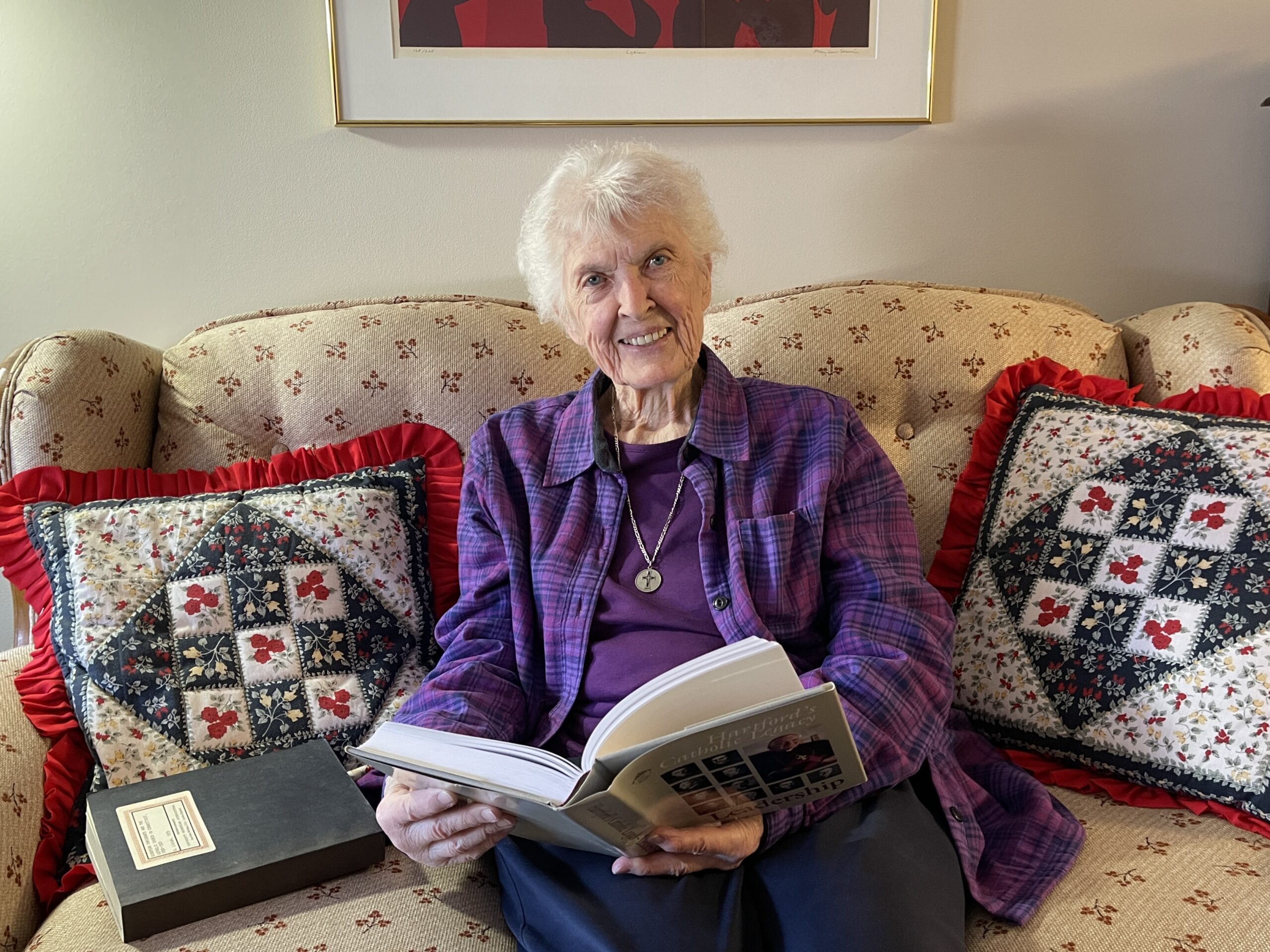
In 1973, Sister Dolores Liptak, a Sister of Mercy, completed her studies for a doctoral degree in American history at the University of Connecticut. But she still needed to write her dissertation. A professor suggested she research Catholic immigrants in Connecticut, beginning in the 1880s.
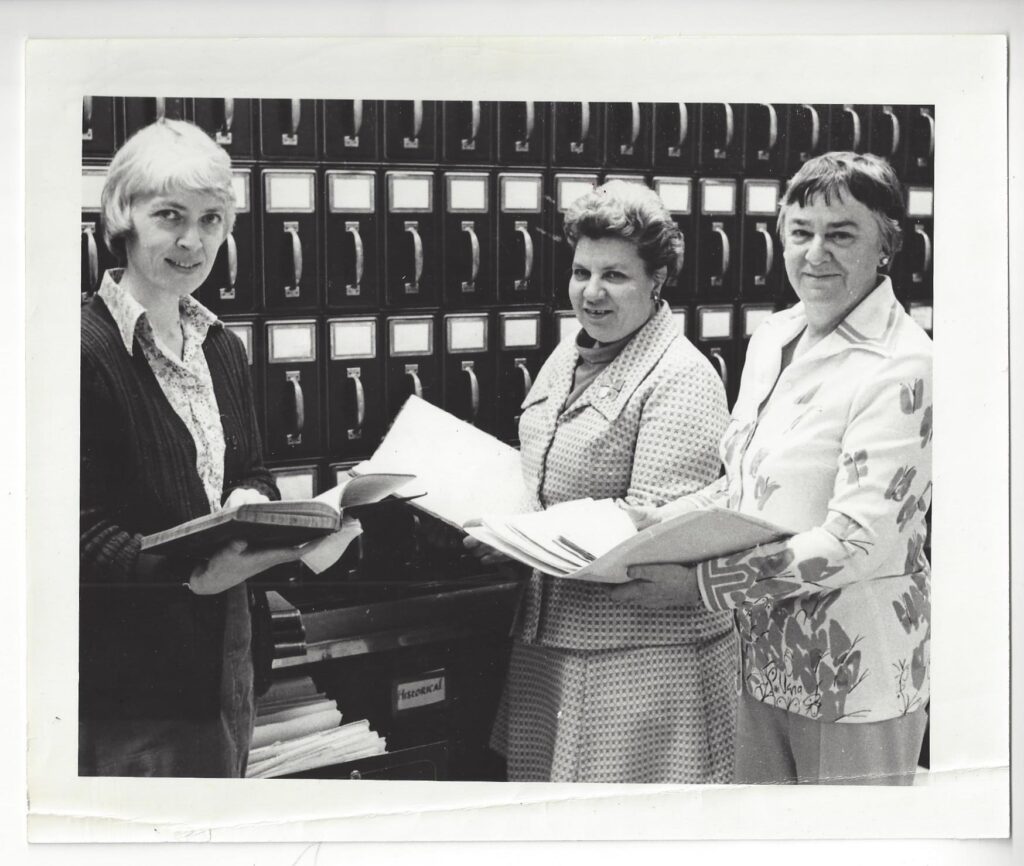
Her research led her to the Catholic Transcript and then to the Archdiocese of Hartford’s archives in the Chancery.
“What I found was two dozen boxes on the floor near a large vault, where they kept the baptismal records,” she recalls. While the baptismal records were safely stored in cabinets, she says, “the historical records had zero organization.”
In order to do her research, Sister Dolores needed to dig through those boxes of correspondence. Also, around that time, the Catholic Church was getting serious about capturing its history.
“In the 1970s, the Vatican issued a document asking every diocese in the world to make sure their archives were organized and available to all serious researchers,” Sister Dolores says. The United States bicentennial was also looming.
So, Sister Dolores, Vivian Stephenson, then editor of the Catholic Transcript, and Mary Caffrey, an English teacher, proposed to then-Archbishop John J. Whealon the creation of what is now the Office of the Archdiocesan Archives.
This year, the Archives, which is located on Farmington Avenue in Hartford, is celebrating its 50th anniversary (1976-2026). Sister Dolores, now 94, is its first archivist.
Today, the Archives functions as a private records facility. It contains the official governing and business records of the archdiocese. It also contains ancillary records, objects, artwork and other materials of historical significance, which reflect the mission and ministry of Catholics as a whole.
The Archives supports three categories of users: the archbishop; Catholic parishes, schools, clergy and archdiocesan administrative offices; and qualified researchers doing approved scholarly research.
It is private and not open to the general public. However, over the years, the diligent collection and maintenance of records by a series of archivists (ranging from religious sisters to professional archivists) has quietly captured the history of bishops, clergy and Connecticut’s Catholic people.
These records have proven invaluable to book authors and to clergy assigned to special projects.
For instance, during her years as an official archivist (1976-1985), Sister Dolores assisted author Christopher Kauffman in finding a document about Blessed Michael McGivney for his book Faith and Fraternalism: The History of the Knights of Columbus.
At the request of Archbishop Whealon, Sister Dolores used the Archives herself to research and author the book Hartford’s Catholic Legacy: Leadership, which chronicled the bishops and how the Church evolved with the influx of European Catholic immigrants.
One gem in the Archives she still recalls is a touching letter written in 1890 by Michael Simko, requesting the state’s first Slovak Roman Catholic parish be created in Bridgeport so 1,200 people could practice their “beloved religion” and “so our souls might not be condemned.”
In recent years, clergy have consulted the Archives in preparation for the Jubilee Year of Mercy and for the Archdiocese of Hartford’s 175th Anniversary. The Archives also houses a time capsule filled with parish memorabilia to be opened in 2093, the Archdiocese’s 200th Anniversary.
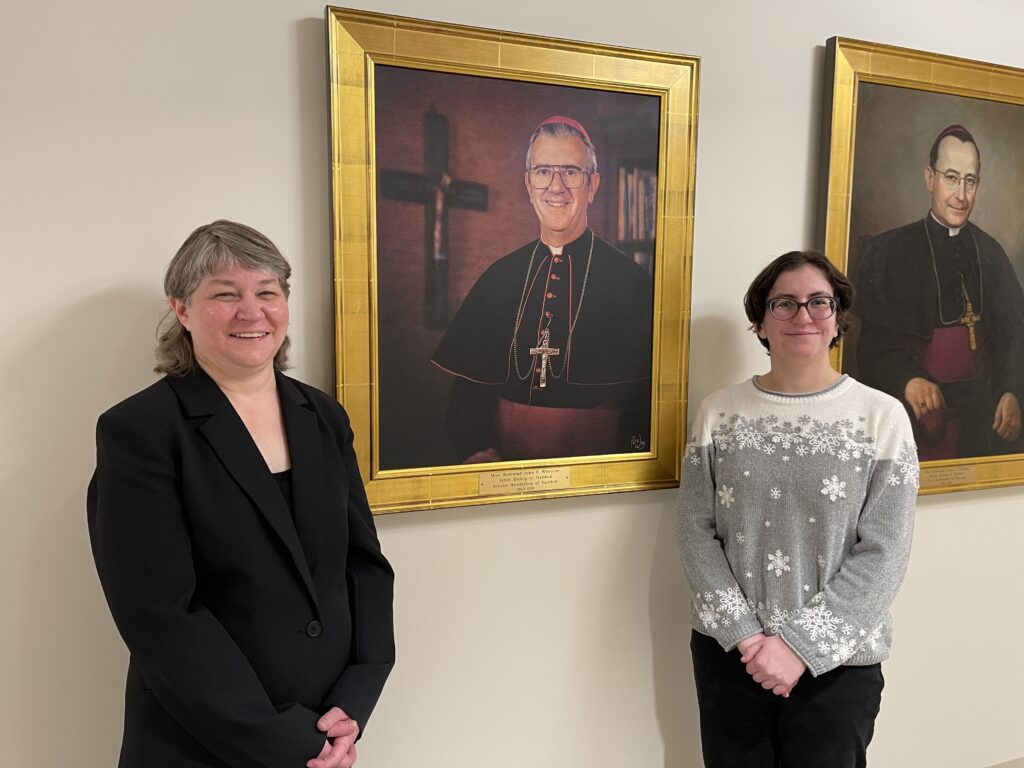
Today, Archivist Bridgette Woodall and Assistant Archivist Lindsey Restelli are carrying on the work of cataloguing archdiocesan records and preserving history. They also process 200-plus research requests from clergy and archdiocesan employees annually. Note: For sacramental records, contact your local parish.