Laudato Si’ Teachings Take Root at East Catholic Shoreline Academy
Story by Shelley Wolf
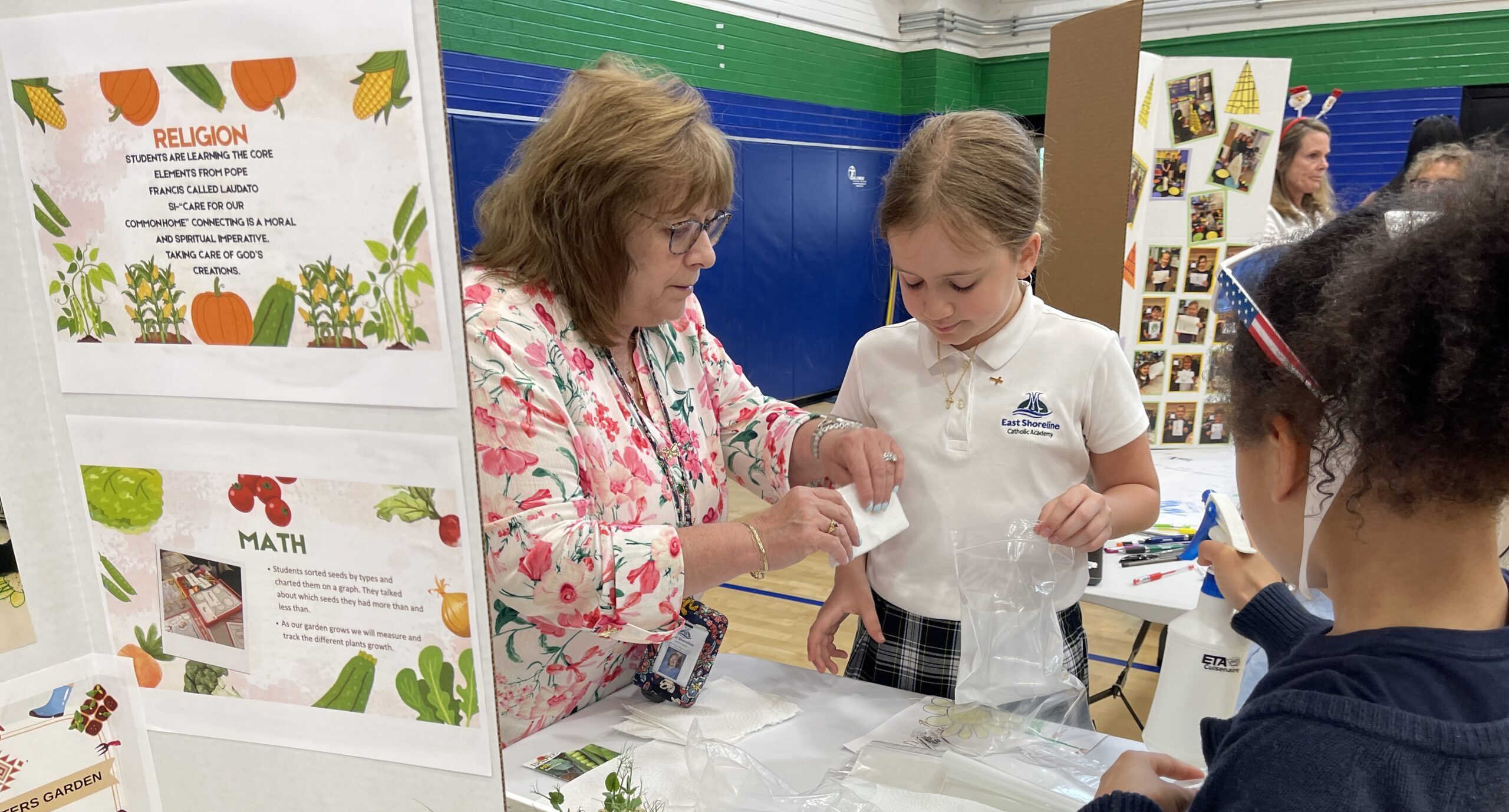
In late May, parents and students wandered the halls and gymnasium, perusing colorful student art and exhibits at East Catholic Shoreline Academy in Branford.
In a timely spring activity, they learned how to sprout seedlings for a vegetable garden. And anyone who enjoyed a snack during the evening event was instructed by a group of youngsters in how to recycle or compost their packaging and leftovers.
It was all part of the school’s “STREAM Night and Art Show,” which showcased, among other initiatives, an ongoing Laudato Si’ program.
Since 2022, East Catholic Shoreline Academy, or ESCA, has been incorporating Pope Francis’ Laudato Si’ teachings into its curriculum in all grades. Students are learning that taking care of God’s creation is a moral and spiritual imperative.
“Every year we add something new,” says Cheryl Panzo, principal of East Shoreline Catholic Academy, which serves students in pre-kindergarten through eighth grade. “It’s really important for us. We definitely want to keep it going. Saving the Earth is kind of a big deal.”
Laudato Si’ is often celebrated on April 22, Earth Day, or on May 24, the anniversary of the day that Pope Francis’ landmark encyclical, Laudato Si’: On Care for Our Common Home, was released in 2015. The document urges everyone to find integrated solutions to address poverty, restore dignity to the excluded, and protect nature, problems that are frequently intertwined.
In 2022, ESCA began its Laudato Si’ program by planting a schoolwide community garden. “We try to get the whole school involved. The focus is on gardening and sustainability,” Panzo explains.
Students planted tomatoes, eggplant, peppers, lettuce, parsley and chives. “Our big goal, should we get there, is to have enough to give to the Branford Community Dining Room,” Panzo says, “and to do a farm-to-table fundraiser.”
This year, for the first time, a portion of the garden has been taken over by first graders, who planted a “Three-Sisters Garden” of corn, beans and squash.
“The beans use the corn stalks for support, and the squash acts as a fertilizer and keeps the moisture in to help the corn and beans grow,” Panzo explains. “This is something Native Americans have been doing in Connecticut long before us.”
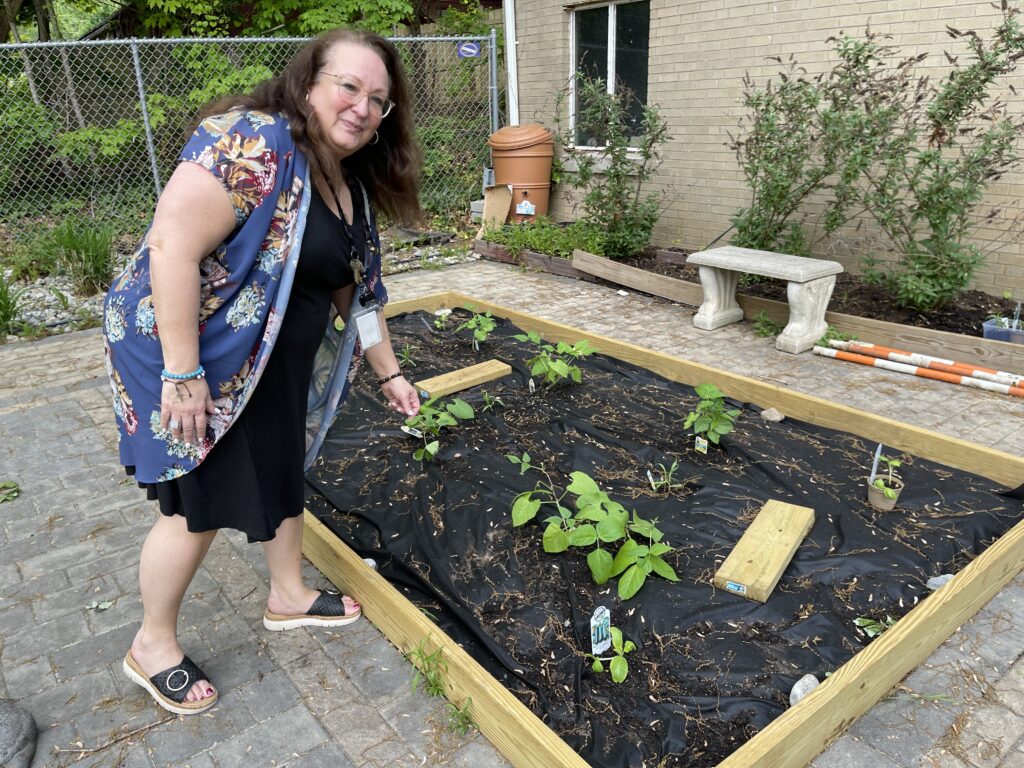
“There’s so much they can learn from this,” says Mary Dobson, the first grade teacher, such as how to track the seasons and the weather. “We’re also being stewards of God’s creation by planting in the soil and seeing how plants grow. And we talk about how when you share your gifts and work together, it’s amazing how much you can do.”
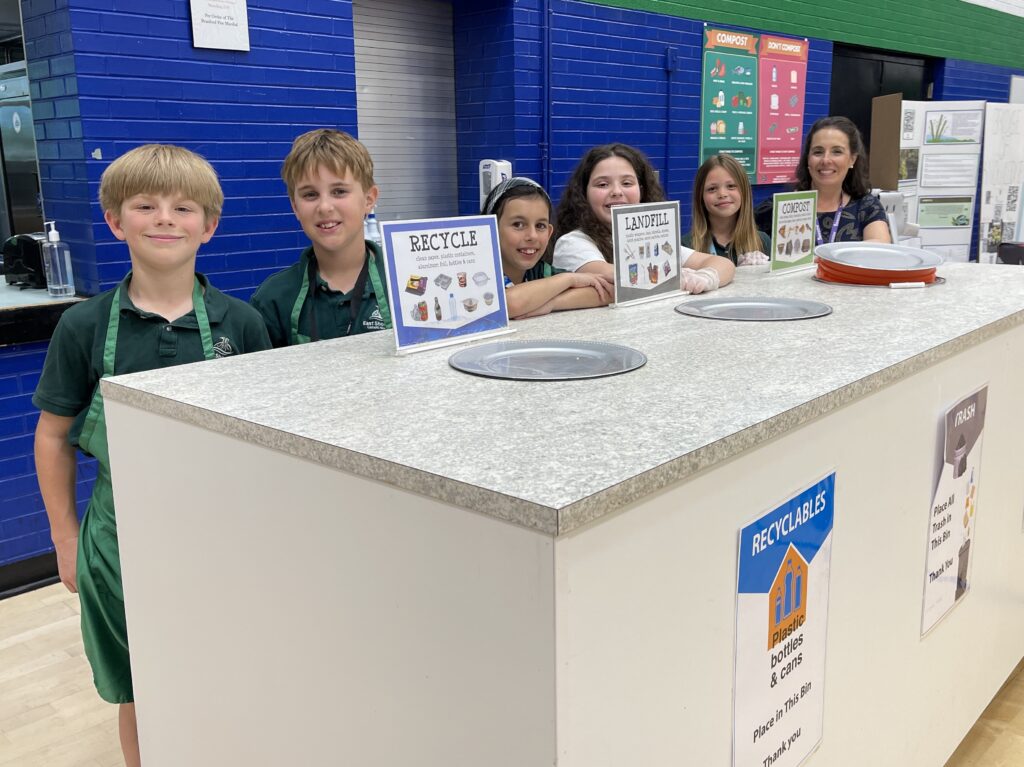
In 2024, with a grant from the Connecticut Catholic Foundation, the school added a Green Team of fourth and fifth graders to take on special Laudato Si’ projects.
The Green Team runs an ambitious composting project, using a video and signage to teach other students how to correctly sort lunch items. “Students are learning what can be composted or not, what’s recyclable or not, and what’s trash,” Panzo explains.
In the cafeteria, Green Team members collect unopened food packages to donate to Food Share. Then they guide their fellow students in setting aside food scraps for a composting company, depositing used containers for recycling, and tossing the rest as trash.
Best of all, Blue Earth Compost, a composting company, picks up the scraps and returns them as soil and fertilizer for the community garden.