
Local Bishop Recalls Drafting ‘Economic Justice for All’ on Its 40th Anniversary
Story by Shelley Wolf
This month marks the 40th anniversary of the landmark pastoral letter “Economic Justice for All: Catholic Social Justice and the U.S. Economy,” which was adopted by the National Conference of Catholic Bishops (now the U.S. Conference of Catholic Bishops) in 1986.
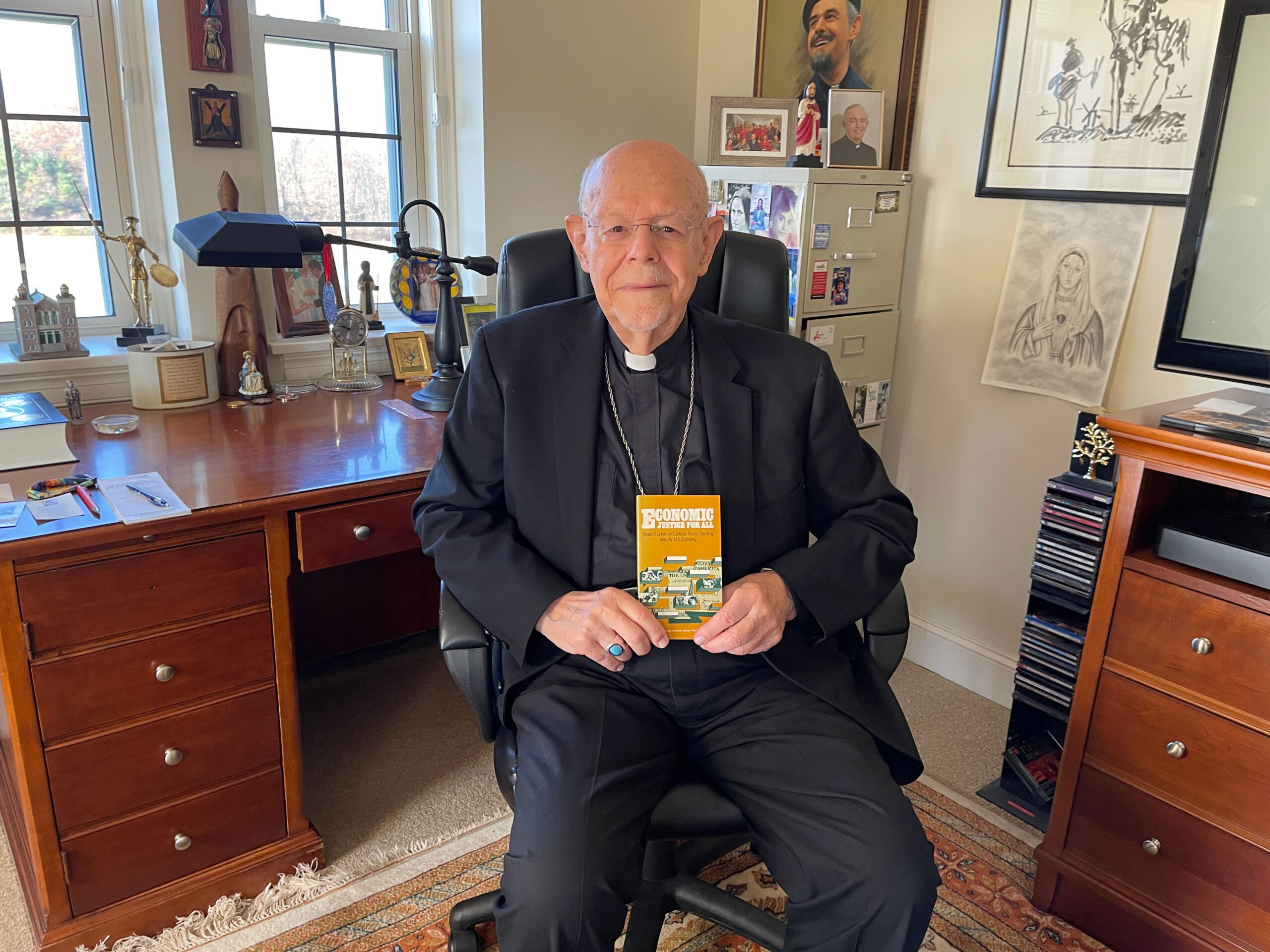
Today, only one of the five bishops who drafted the teaching document is still living to talk about it: Auxiliary Bishop Emeritus Peter A. Rosazza of the Archdiocese of Hartford. He was invited to speak about the pastoral letter earlier this year at a conference held at Georgetown University in Washington, D.C.
“It was an honor. ‘Economic Justice for All’ continues to be used at Catholic colleges, even at Dartmouth College,” Bishop Rosazza says.
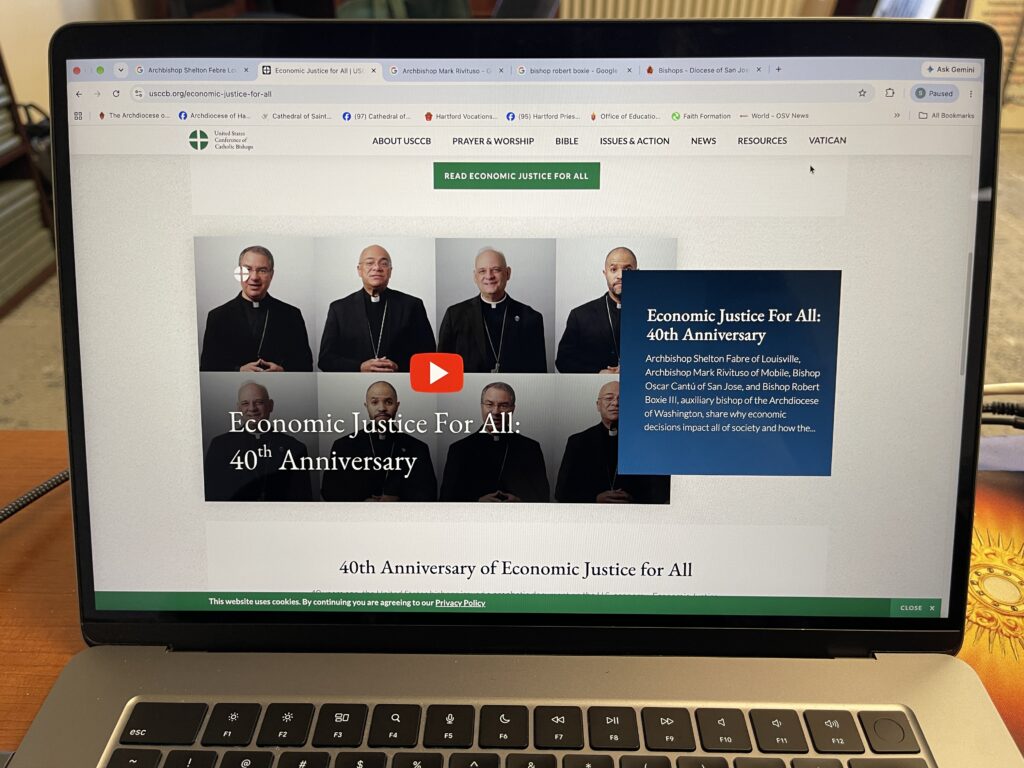
This year, in honor of the pastoral letter’s 40th anniversary, the current U.S. Conference of Catholic Bishops produced a video discussing the impact of economic decisions on all of society. The video, available at usccb.org/economic-justice-for-all, is accompanied by downloadable PDFs of the 1986 “Economic Justice for All” document and a 2026 “Economic Justice for All Summary Resource,” which highlights key points of the historic pastoral letter.
“Unfortunately, the principles of economic justice articulated by the bishops in 1986 remain as relevant and necessary today amid persistent poverty, growing inequality, revolutionary technological changes, and the marginalization of many people and communities,” the 2026 “Summary Resource” states.
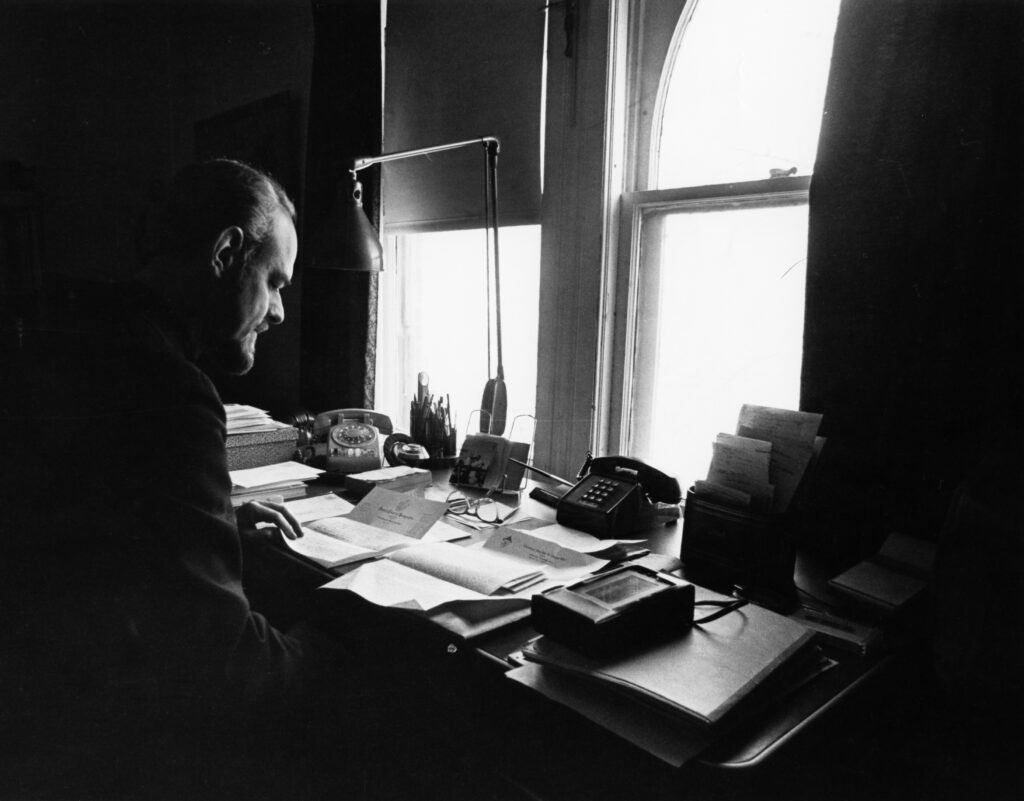
Back in the 1970s, Bishop Rosazza was co-pastor of Sacred Heart Parish in Hartford, where he saw firsthand the effects of poverty on parishioners. In 1978 he was named an auxiliary bishop and in the early 1980s, on the suggestion of several priests, he put forth a motion to the Bishops’ Conference to do a study on the U.S. economy and capitalism, which he says passed overwhelmingly in a vote by the bishops.
The landmark project, which took four years, sought to point out the human and ethical dimensions of economic life. Drawing from Catholic social teaching and traditional American values, it asserted “the need for a moral vision” on the economy.
“Every economic system has to be judged on whether it enhances or hurts the dignity of people,” Bishop Rosazza says today. “This is a theological concept. We’re one family.”
Among its many points, the document stated that the economy exists for the dignity and flourishing of every human person. It noted Christians must ask: “What does the economy do for people? What does it do to people? And how do people participate in it?”
Drafted as a personal invitation to lay Catholics, “Economic Justice for All” challenged Catholics to evaluate their own economic decisions at home and at work, in the marketplace, and government policies through the lens of human dignity and the common good.
Looking back, Bishop Rosazza is proudest of the inclusive process used in drafting the pastoral letter and the many experts who contributed to it. “The process can be more important than the outcome,” he says.
Disappointed with their first draft, Bishop Rosazza recalls, the writing committee tapped Father David Hollenback, a Jesuit priest and moral theologian, as a key contributor. “Without him, I don’t think we would have had this document,” the bishop says.
Father John Donahue, another Jesuit and New Testament scholar, drafted the section on economic justice and the Scriptures.
The writers produced four drafts and incorporated feedback gleaned through 10,000 pages of written responses plus listening sessions, involving faith groups, farmers, and scholars. James Tobin, a Nobel laureate in economics and a professor at Yale University, also weighed in.
“James Tobin provided criticism to our team saying, ‘Overall, it’s a little economically naïve, but you’d do well to point out the poverty, the inequality,’” Bishop Rosazza recalls.