Treasures of Our Faith: The Reliquary at St. Stanislaus Church in Bristol
Story by Jim Tierney
A renewed devotion to the saints has brought new life to a historic collection of relics at St. Stanislaus Church in Bristol. Inspired by a powerful experience at the National Eucharistic Congress in 2024, parishioners rediscovered relics that had rested for decades and created a new reliquary display to share them with the faithful.
In July 2024, several parishioners of St. Stanislaus Parish attended the National Eucharistic Congress, where one of the most popular attractions was a large relic display. Visitors often waited hours before the exhibit even opened, and once it did, steady lines formed throughout the day as people came to venerate and pray at the site of the relics. The experience revealed a deep spiritual hunger to encounter these tangible connections to the saints.
When the group returned to Bristol and suggested obtaining a relic for the parish, then-Pastor Tomasz Sztuber shared unexpected news: the parish already possessed a collection of relics that had been stored in the rectory for many years. But significant work remained to prepare the relics for public veneration.
Many of the reliquaries had dulled or tarnished over time, and some had become slightly warped. In fall 2024, the parish formed a committee to plan the project, raise awareness and develop educational materials around an initiative called, “Treasures of Our Faith.”
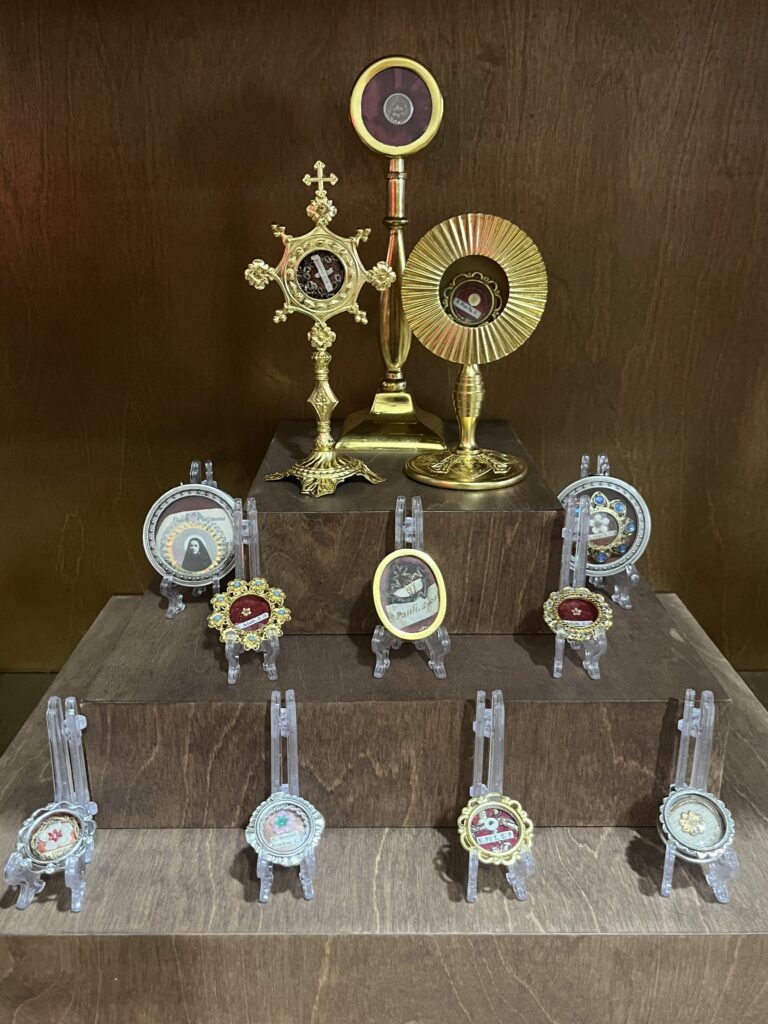
The restoration effort brought together local craftsmen to restore the reliquary and modify an antique cabinet to house the collection. Their work not only preserved the beauty of the reliquary, but highlighted the care the Church takes in safeguarding these sacred objects.
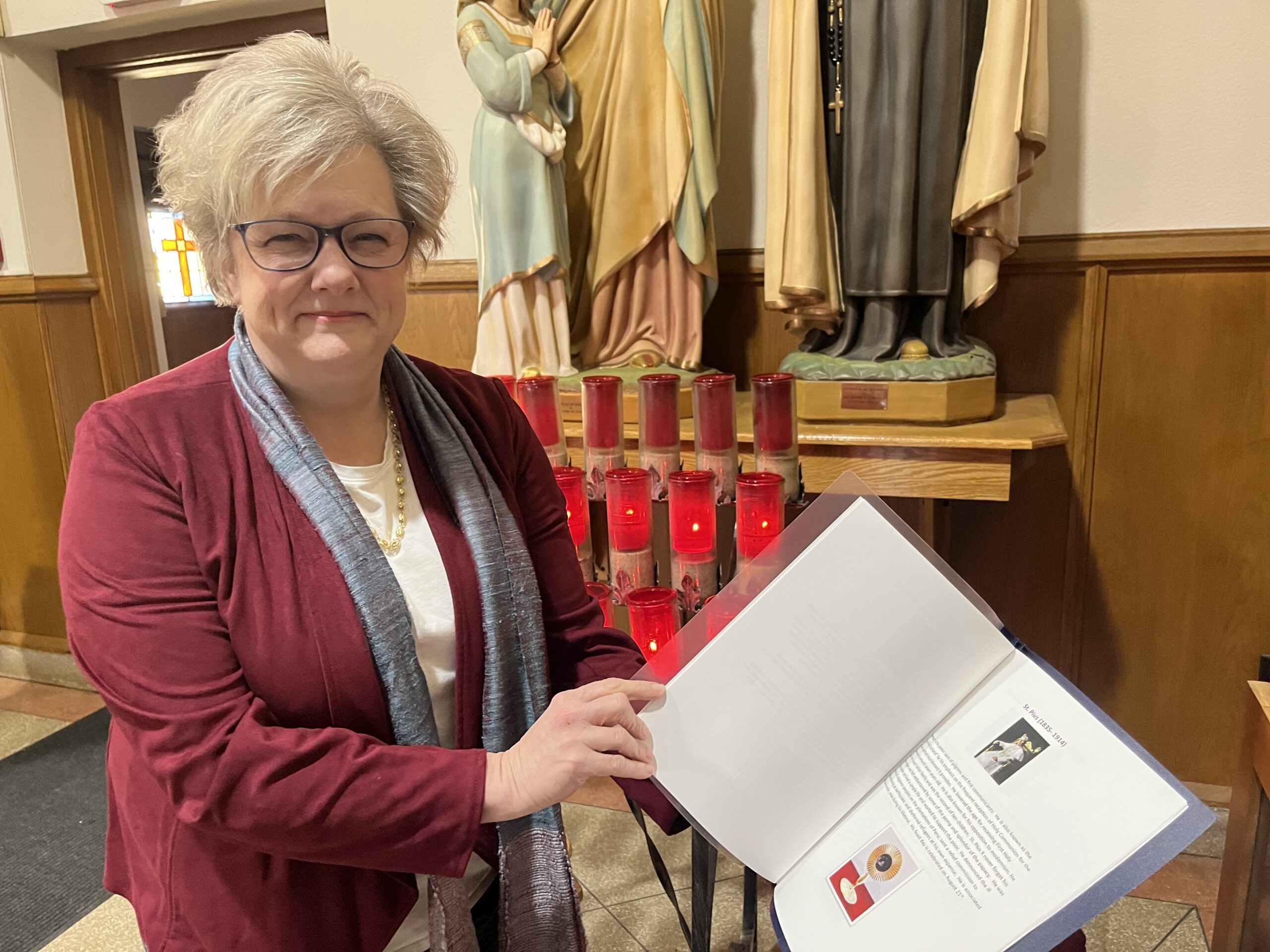
The Catholic Church has long maintained strict processes to ensure the authenticity of relics, according to parishioner Michelle Fox, a former medieval historian who assisted with the relic project.
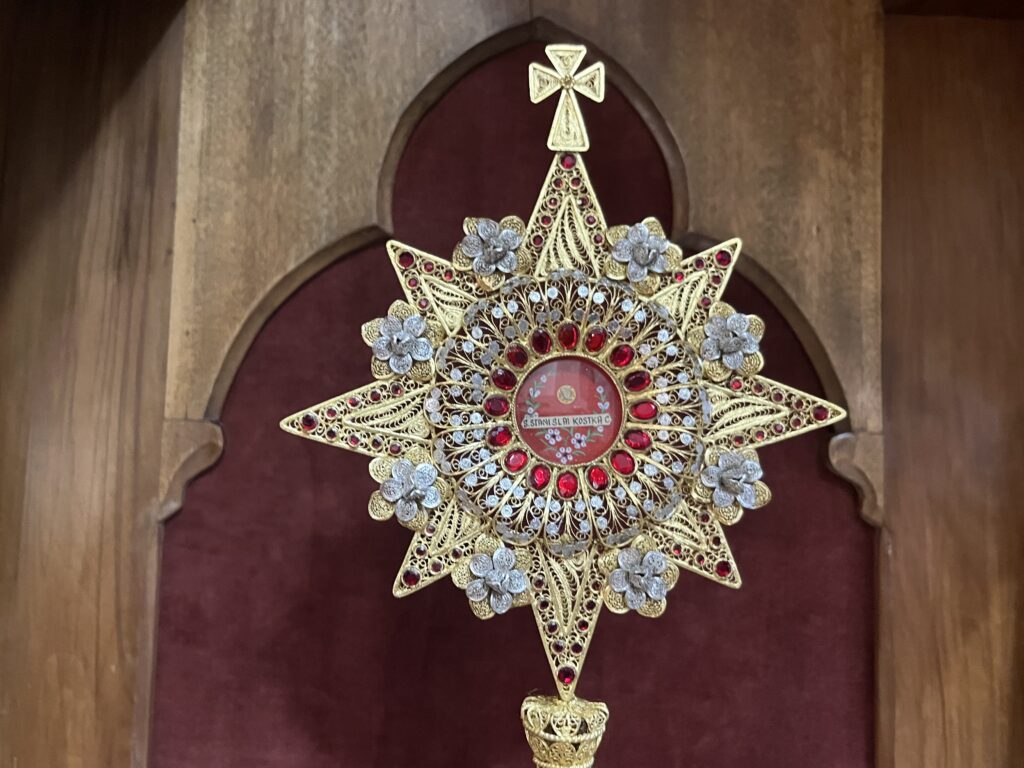
Each relic is typically enclosed in a small metal container called a theca with glass on one side, Fox notes. Inside is a Latin identification label known as a cédula. The relic and label are sealed with red silk thread and an ecclesiastical wax seal, preventing tampering and confirming that the relic has remained unopened since authentication. Many relics are also accompanied by a certificate of authenticity, or authentica, issued by a bishop or the Vatican.
These safeguards developed over centuries help to prevent fraud and protect the sacred character of relics. The Catholic understanding of relics, Fox says, can be compared to family photos or memorials: they are physical objects that connect to the memory and sacrifice of a real person.
“Although relics have sometimes been associated with conversion and miracles, Catholics do not believe they possess magical powers,” Fox says, pointing out a distinction between praying with relics and Eucharistic Adoration and worshipping the Real Presence. “Catholics are not worshipping the physical object, nor the saint from whom it came,” she adds. “Worship is reserved for God alone and any miracle that may occur when praying with a relic comes from God working through them.”
Last year, the restored reliquary was unveiled on All Saints’ Day. Leading up to the feast day, the parish offered bulletin articles, homilies and a half-day educational seminar exploring the biblical origins of relic veneration, the lives of the saints and the proper way to venerate relics. The celebration concluded with a procession of the relics at the opening of the Vigil Mass.
The reliquary is available for private prayer whenever the church is open. Parish officials plan to revive the tradition of displaying individual relics on the feast days of their saints.