Skip to content

Rest in Peace: Rev. Gerald H. Dziedzic

Rev. Gerald H. Dziedzic died February 25th in New Britain.  Father Dziedzic was born in 1947 and ordained in 1974. His last assignment as Pastor was at Saint Francis Xavier/Our Lady of the Lakes in New Milford. He entered Senior Status in 2022. Further details will be sent when they are available. A Mass of Christian Burial will be celebrated at 11 a.m. on Friday, March 6 at St. Aloysius Church, 254 Burritt St., Plantsville. Family and friends are asked to meet directly at church. Burial with military honors will follow in the Immaculate Conception Cemetery, Southington. There are no calling hours. Plantsville Funeral Home has been entrusted with handling the arrangements. For online condolences and directions, please visit https://www.plantsvillefuneralhome.com/.

Eternal rest grant unto him, O Lord. May Perpetual light shine upon him. May his soul and the souls of all the Faithful Departed thru the Mercy of God rest in peace.

Archdiocesan Archives Marks 50 Years of Preserving Catholic History

Story by Shelley Wolf

In 1973, Sister Dolores Liptak, a Sister of Mercy, completed her studies for a doctoral degree in American history at the University of Connecticut. But she still needed to write her dissertation. A professor suggested she research Catholic immigrants in Connecticut, beginning in the 1880s.

Her research led her to the Catholic Transcript and then to the Archdiocese of Hartford’s archives in the Chancery.

“What I found was two dozen boxes on the floor near a large vault, where they kept the baptismal records,” she recalls. While the baptismal records were safely stored in cabinets, she says, “the historical records had zero organization.”

In order to do her research, Sister Dolores needed to dig through those boxes of correspondence. Also, around that time, the Catholic Church was getting serious about capturing its history.

“In the 1970s, the Vatican issued a document asking every diocese in the world to make sure their archives were organized and available to all serious researchers,” Sister Dolores says. The United States bicentennial was also looming.

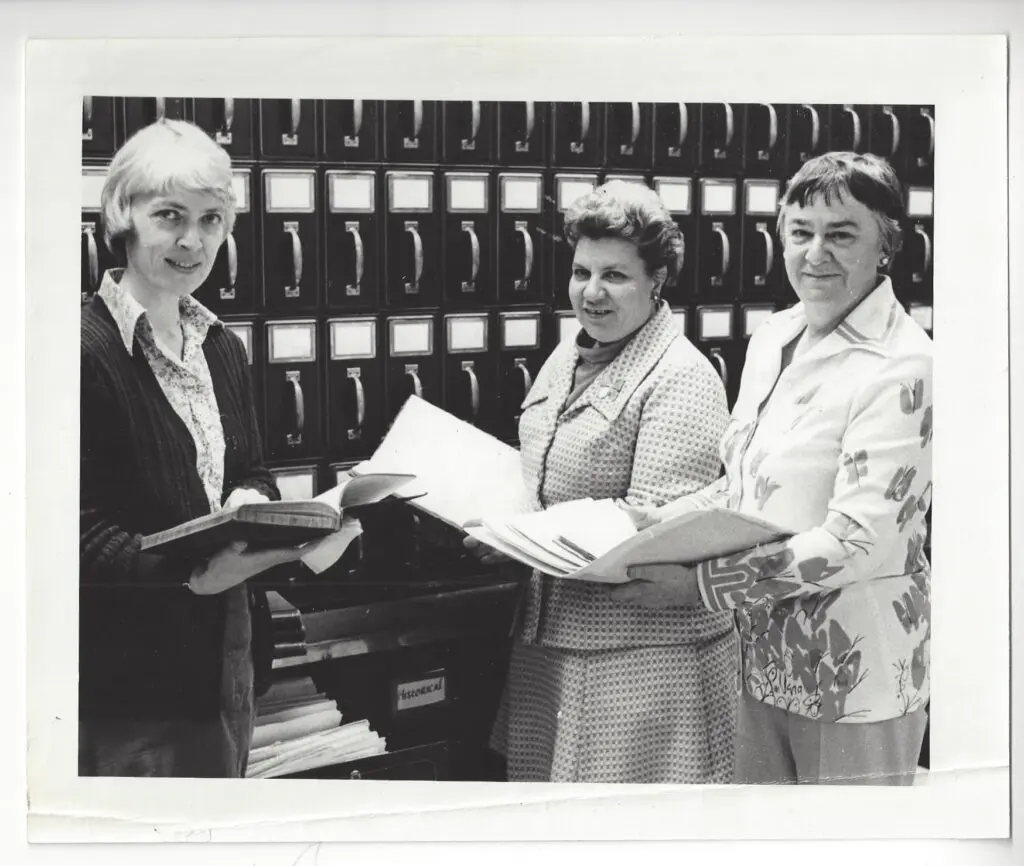
So, Sister Dolores, Vivian Stephenson, then editor of the Catholic Transcript, and Mary Caffrey, an English teacher, proposed to then-Archbishop John J. Whealon the creation of what is now the Office of the Archdiocesan Archives.

This year, the Archives, which is located on Farmington Avenue in Hartford, is celebrating its 50th anniversary (1976-2026). Sister Dolores, now 94, is its first archivist.

Today, the Archives functions as a private records facility. It contains the official governing and business records of the archdiocese. It also contains ancillary records, objects, artwork and other materials of historical significance, which reflect the mission and ministry of Catholics as a whole.

Published in the Catholic Transcript on Feb. 27, 1977, this photo shows the original staff of the Archdiocesan Archives: from left, Sister Dolores Liptak, historian and member of the Sisters of Mercy; Vivian Stephenson, Catholic Transcript news editor; and Mary Caffrey, an English teacher. CATHOLIC TRANSCRIPT FILE PHOTO

The Archives supports three categories of users: the archbishop; Catholic parishes, schools, clergy and archdiocesan administrative offices; and qualified researchers doing approved scholarly research.

It is private and not open to the general public. However, over the years, the diligent collection and maintenance of records by a series of archivists (ranging from religious sisters to professional archivists) has quietly captured the history of bishops, clergy and Connecticut’s Catholic people.

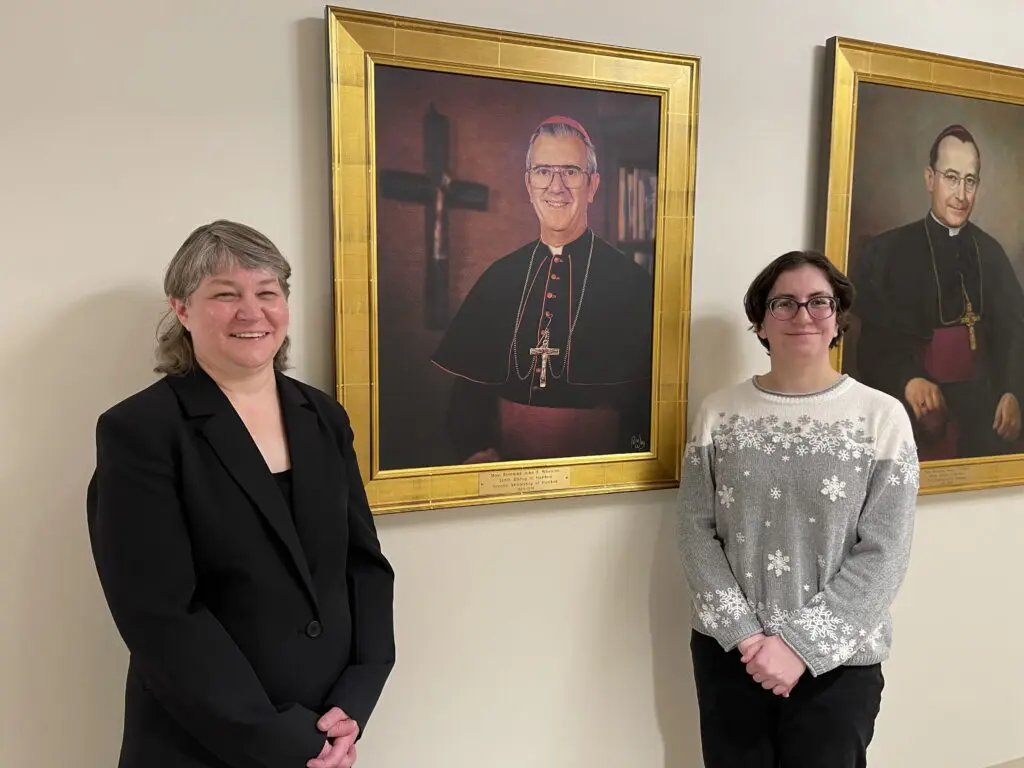
Archivist Bridgette Woodall, left, and Assistant Archivist Lindsey Restelli, the current caretakers of the Archdiocesan Archives, flank a portrait of Archbishop John J. Whealon, who approved the creation of the Office of the Archdiocesan Archives in 1976. PHOTO BY SHELLEY WOLF

These records have proven invaluable to book authors and to clergy assigned to special projects.

For instance, during her years as an official archivist (1976-1985), Sister Dolores assisted author Christopher Kauffman in finding a document about Blessed Michael McGivney for his book Faith and Fraternalism: The History of the Knights of Columbus.

At the request of Archbishop Whealon, Sister Dolores used the Archives herself to research and author the book Hartford’s Catholic Legacy: Leadership, which chronicled the bishops and how the Church evolved with the influx of European Catholic immigrants.

One gem in the Archives she still recalls is a touching letter written in 1890 by Michael Simko, requesting the state’s first Slovak Roman Catholic parish be created in Bridgeport so 1,200 people could practice their “beloved religion” and “so our souls might not be condemned.”

In recent years, clergy have consulted the Archives in preparation for the Jubilee Year of Mercy and for the Archdiocese of Hartford’s 175th Anniversary. The Archives also houses a time capsule filled with parish memorabilia to be opened in 2093, the Archdiocese’s 200th Anniversary.

Today, Archivist Bridgette Woodall and Assistant Archivist Lindsey Restelli are carrying on the work of cataloguing archdiocesan records and preserving history. They also process 200-plus research requests from clergy and archdiocesan employees annually. Note: For sacramental records, contact your local parish.

New Book Unveils Story of St. Michael Church, Connecticut’s First Italian Church

Story by Joe Pisani

Daniel Elliott cherishes his boyhood memories of celebrating the feast of St. Mary Magdalene on Wooster Street in New Haven, when his parents would dress him in a snappy white suit to watch the procession of bands, Italian religious societies, food vendors and the statue of Santa Maria Maddalena being carried on a platform by parishioners of St. Michael’s Church.

“Wooster Street would be festooned with red, white and green garland, and our entire family would stand outside my grandmother’s apartment watching,” Elliott recalls. “As a kid, I went to Mass at St. Michael’s, and all the religious processions were so cool to me.”

A parishioner and former trustee of the church, Elliott’s love of his Italian heritage and his interest in genealogy inspired him to undertake a nearly three-year project, writing his first book, The History of St. Michael’s Roman Catholic Church, about the first Italian-American parish in Connecticut, founded in 1889 to serve the influx of immigrants.

The 375-page work, which is available on Amazon, is also a chronicle of the Italian community and the Missionaries of St. Charles Borromeo, known as the Scalabrinians, founded by St. John Baptist Scalabrini in 1887 to support immigrants and who staffed the church for almost 120 years.

For more than 130 years, six generations of his family on his mother Barbara Colloso Elliott’s side have worshipped at St. Michael’s, which is part of the Blessed Michael McGivney Parish. And while his father David is of Irish, Scottish and English lineage, he has a love of Italian culture and food.

“I always had an interest in St. Michael’s history because it seemed to be the most spectacular church,” Elliott says. “I’ve gone there from the time I was a little kid and attended the school until the second grade.”                         

Today, the Glastonbury resident and attorney worships there with his wife Lauren and daughters Grace Angelika, 5, and Isla Maddalena, 2.

Elliott’s interest led him to Dr. Mary Elizabeth Brown, archivist and historian at the Center for Migration Studies in New York City, where he discovered a treasure trove of material about the church.

“We got to talking, and the idea just came up that maybe I should do a book on St. Michael’s,” he recalls. “She provided me with access to the records I needed.”

Elliott’s research revealed that then-Bishop Lawrence McMahon “was relentless in his support of Italian immigrants in New Haven and he went all out to help them.”

Although acrimony between Irish and Italian communities was common, the Italian immigrants revered the three Irish priests assigned to them before the Scalabrinians arrived.

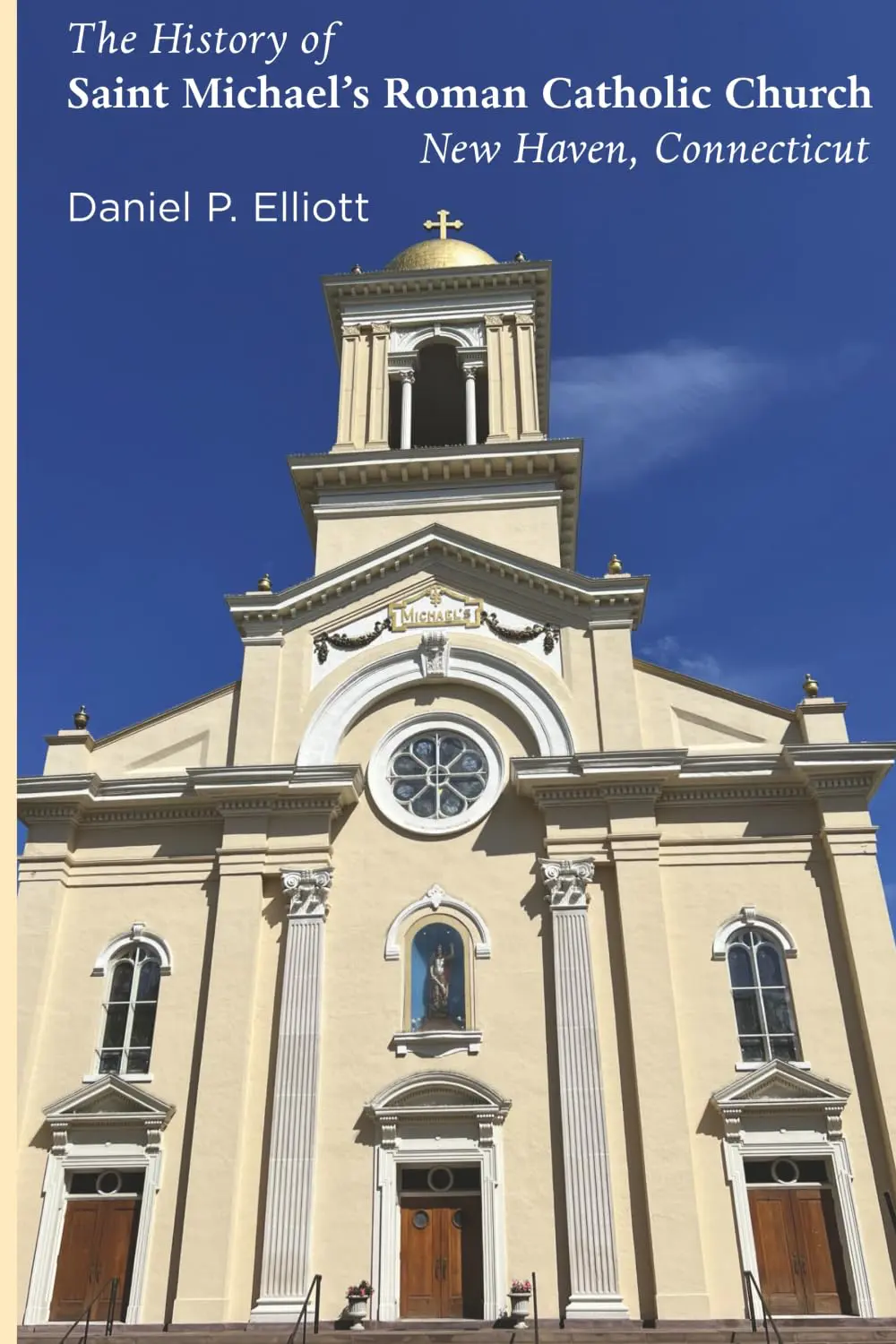
Front cover of Dan Elliott’s new book entitled The History of St. Michael’s Roman Catholic Church

Religious societies associated with Italian towns were formed to support immigrants, including the Santa Maria Maddalena Society, St. Trofimena Society, St. Andrew the Apostle Society, St. Catello Society and the Santa Maria delle Vergini Society, along with a society honoring St. Ann.

His book also describes the work of the Apostles of the Sacred Heart, who arrived in 1906 to help the Italian community and run St. Michael’s School. The sisters even began day care so immigrant families could work in the factories and have a better life.

The generation of immigrants that arrived between 1880 to 1920 is gone, but the church is trying to preserve traditions for younger Italian-Americans.

“We’re fortunate to have people who are strongly devoted to this culture and want to preserve these traditions for our kids and grandkids,” Elliott says. “And the way that happens is for us to continue with the processions and the feasts, and I hope in some small way my book contributes to that.”

Archbishop’s Annual Appeal Beer Tasting Mixes Fun, Fellowship and Thanks

Story by Shelley Wolf

This year’s Archbishop’s Annual Appeal Beer Tasting & Cocktail Reception offered frosty weather and brews in an atmosphere of warm Catholic fellowship.

Approximately 300 people braved the frigid weather Feb. 6 to gather at the Aqua Turf Club in Plantsville, where they shared an evening of fun and fellowship, sampled local beers and wines, and met Archbishop Christopher J. Coyne in a relaxed setting. Donors also learned how the Appeal is making a difference.

“We take care of people,” Archbishop Coyne told attendees during brief remarks, sharing the many reasons the Archbishop’s Annual Appeal is so vital.

Giving an update on the current landscape of charitable need, Archbishop Coyne reported hearing about college students turning to food pantries, people in cars driving up to soup kitchens, and families appearing at shelters that once served only homeless individuals.

“We’re not just seeing the usual people,” he said. “What we’re seeing now is a lot of rent poor, with no money left for food.”

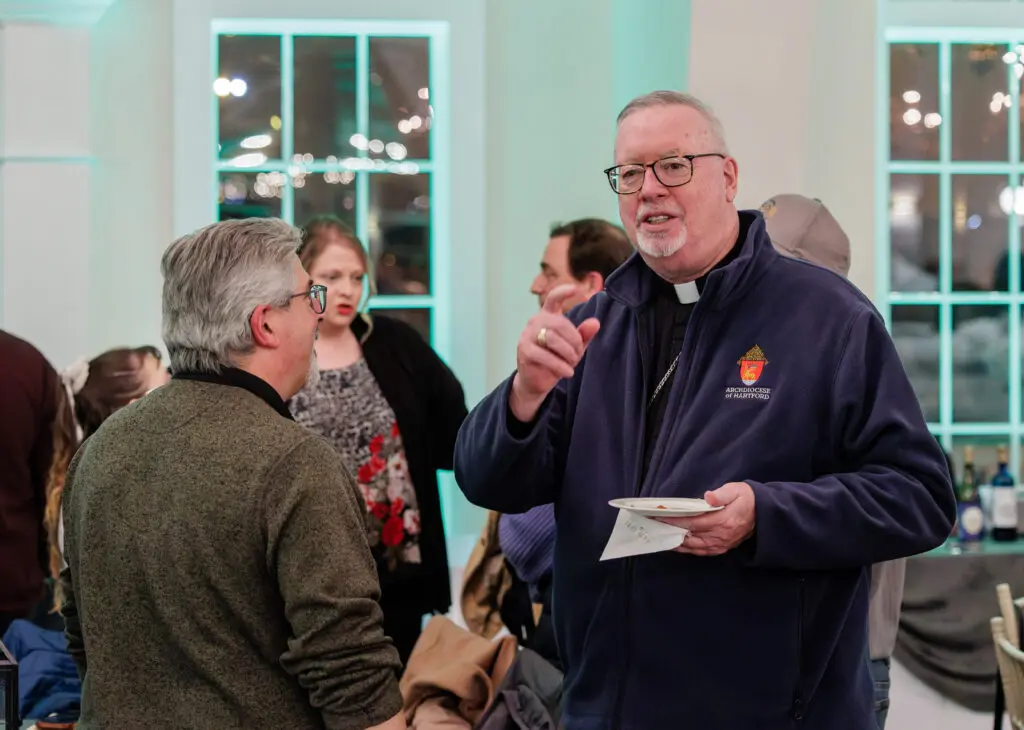
Archbishop Christopher J. Coyne makes a point while speaking to Ken Santopietro during the Beer Tasting event. PHOTO BY AARON JOSEPH

Archbishop Coyne cited agencies on the front lines of providing food and shelter – House of Bread in Hartford, St. Vincent DePaul Mission of Waterbury and St. Vincent De Paul Mission of Bristol – which receive Appeal funds.

“We fill in the gaps. We never ask for credentials,” the archbishop said. “We just say, ‘How can we help you?’”

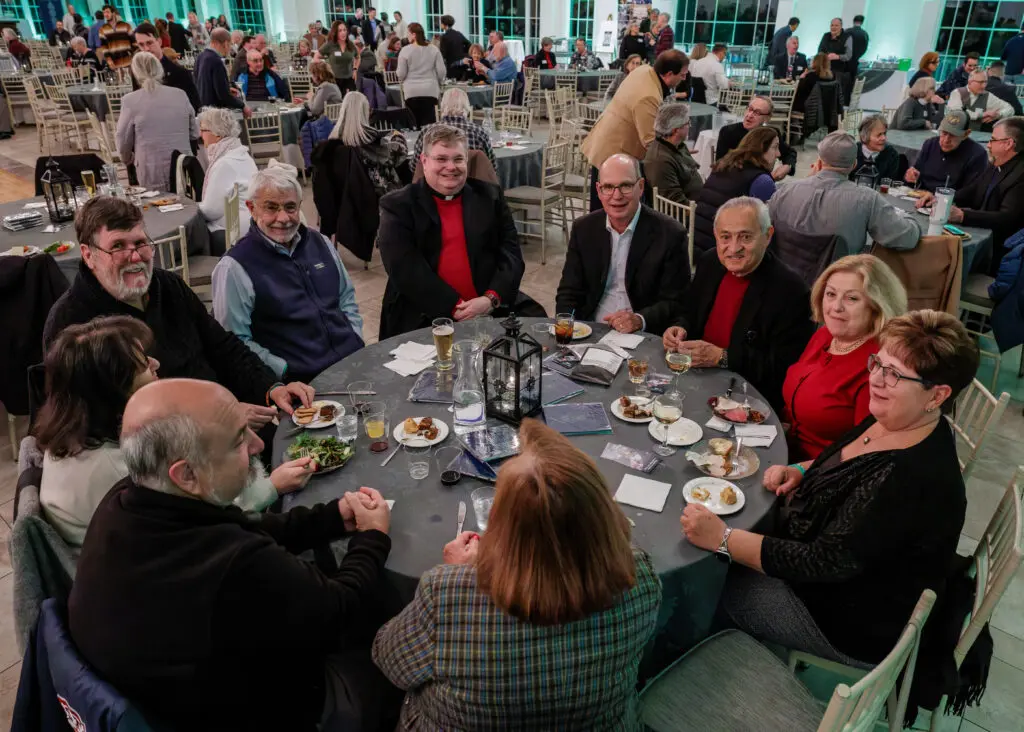
Father Joseph Cronin, center, and Father Nicholas Melo, lower left, share refreshments with donors from Southington and Wethersfield. PHOTO BY AARON JOSEPH

At the event, two invited speakers also shared their heartfelt appreciation to donors for making their ministries possible.

“Malta House of Care is a great example of what can be accomplished by a grassroots organization when needs are identified and people decide to put their time, their resources and energy into meeting those needs,” said Brian Sheehan, board chair for the Malta House of Care.

Today, Malta serves 1,500 uninsured individuals, providing primary medical care. With a $1.7 million budget, the agency is funded solely by private philanthropy, Sheehan said, which includes the Archbishop’s Annual Appeal.

The Appeal contributes to the Malta van and the stationary Malta Clinic located behind the Cathedral of St. Joseph in Hartford.

“Old friends are the best friends,” Sheehan said, “and all of you have been great friends to Malta House of Care, since its inception 20 years ago.”

Father Anthony Federico, director of Vocations and director of Seminarians for the Archdiocese of Hartford, asked, “Do you know what gets me fired up? Now it’s being a part of the Archdiocese of Hartford, as the Lord does an historic resurgence of the Catholic faith in our state.

“Since we started praying the Prayer for Priestly Vocations together three years ago,” Father Federico said, “the Lord has been on an absolute heater.”

In the last three years, an unprecedented 157 young men have come forward to discern a vocation to the priesthood. Another 22 are in formation for the diaconate, 33 women have entered convents, and the archdiocese is seeing a surge in sacramental Catholic marriages.

With 30 seminarians in formation next year at a cost of $65,000 per year for eight years each, the archdiocese must fund their education.

“The good Lord just sent us a bill for $15 million,” Father Federico said with good humor, “and that’s where you come in. I want to thank you. The vocations office is funded almost entirely from your generosity.”

For more information on the Archbishop’s Annual Appeal, or to donate to the 2026 campaign, visit archdioceseofhartford.org/appeal

No Retiring When You Work for Jesus

Story by Joe Pisani

My friends recently surprised me with tickets to a concert by Darlene Love, the legendary R&B singer whose trademark song is “Christmas (Baby, Please Come Home),” which she performed for years on the David Letterman Christmas show.

Back in the 1960s, she recorded “He’s a Rebel,” written by Hartford native Gene Pitney, known as the Rockville Rocket, and other classics, including “He’s Sure the Boy I Love,” which she didn’t get credit for because they were released as recordings for the Crystals, a popular girl group back then.

As a backup singer, she worked with everyone from Frank Sinatra to John Lennon and Elvis, who would sing hymns with her that they learned as children.

What else would you expect from the daughter of a minister who sang Gospel in the church choir? An Oscar and Grammy winner, Love still keeps a busy schedule at 84. And who does she thank for her career, her talent and her success? God.

One Gospel song she performs at every concert is “Marvelous,” written by Walter Hawkins, as an expression of her gratitude and faith.

The lyrics proclaim:

I will sing your praise
For you’ve done such a Marvelous thing
For someone so wretched
Yet my soul you have redeemed.

No one else could do it,
No one could care half as much
Yet you thought my soul was worth it
So you gave your only Son.

You gave that I might live,
You gave that I might be set free,
Exchanged your life for mine,
What a Marvelous thing you’ve done…

Those are powerful words to hear at a pop concert from an 84-year-old performer, who does a wonderful job sharing the Good News. As she praised God, my first thought was: With Jesus, there’s no retirement. No matter how old you are, no matter if you have millions of fans, no matter if you’re a relative unknown, God has a plan.

God told the prophet Isaiah: “Even to your old age, I will be the same, and I will bear you up when you turn gray. I have made you, and I will carry you. I will sustain you and deliver you.” (Isaiah 46:4)

God has a long history of taking seniors and giving them BIG jobs. It’s not like the corporate world. He doesn’t mind if you have gray hair and wrinkles.

When Joshua, the leader of the Israelite tribes, was looking forward to a little relaxation, the Lord said to him: “Though now you are old and advanced in years, a very large part of the land still remains to be possessed.” Translation: Forget the vegetable garden and playing checkers at the senior center. Get to work.

Abraham was 75 and worshiping idols when the Lord came knocking and told him to set out from Haran to a new land, where God would lead him.

Let’s not forget Moses. God called him at 80 and told him to confront Pharaoh and lead the Israelites out of captivity in Egypt.

None of them thought they could do what the Lord wanted. It was too overwhelming. They were too old. But God held them up and did the heavy lifting. They just had to say yes.

Last year, I met a woman in her 80s who runs the parish food pantry and another woman in her 80s who oversees a ministry that gives baby clothes to single moms and families in need.

My friend Maria has a prayer shawl ministry that she began in her 70s. This year she’s going to be 85 and she told me: “I wish I was 20 years younger. I retired from work when I was 75. Something is telling me I need to do something to help even more. I just want to do what God and the Blessed Mother want me to do.”

When you say yes to God’s plan, he finds a way to make it work, no matter how old you are. As Jesus said, “The harvest is abundant, but the laborers are few; so ask the master of the harvest to send out laborers for his harvest.”

You see, Jesus isn’t the kind of guy who forces his senior employees to take a buyout package. He wants everybody — junior, senior and in-between to keep working. He’s always hiring, and in case you didn’t know, he has a great long-term benefits package.

So regardless of your age, never think God is done with you because he will call you out of “retirement.”

As Psalm 92 says: “In old age, they will still bear fruit; healthy and green they will remain.” Darlene Love is proof.
Masks, Music and Ministry Highlight Sacred Heart’s Mardi Gras Celebration

Fellowship and Faith at Sacred Heart’s Mardi Gras Celebration

Story by Jim Tierney

As winter lingers and Lent approaches, Sacred Heart Parish in Suffield is once again inviting parishioners to gather for a joyful celebration that brings the community together before the reflective season begins.

On Feb. 15, following the 10:30 a.m. Mass, parishioners are encouraged to head to the church hall for the second annual Mardi Gras celebration—a lively afternoon of food, music and fellowship.

Mardi Gras celebrations, especially those rooted in New Orleans tradition, are an institution in themselves, culminating with Fat Tuesday, the day before Ash Wednesday on Feb. 18. At Sacred Heart, the spirit of Mardi Gras is embraced not simply as a party, but as a meaningful pause before the Church enters Lent—a season centered on prayer, fasting and almsgiving in preparation for Easter.

Last year’s inaugural event drew between 80 and 100 people, ranging from senior citizens to young families with children, and organizers say the response was overwhelmingly positive.

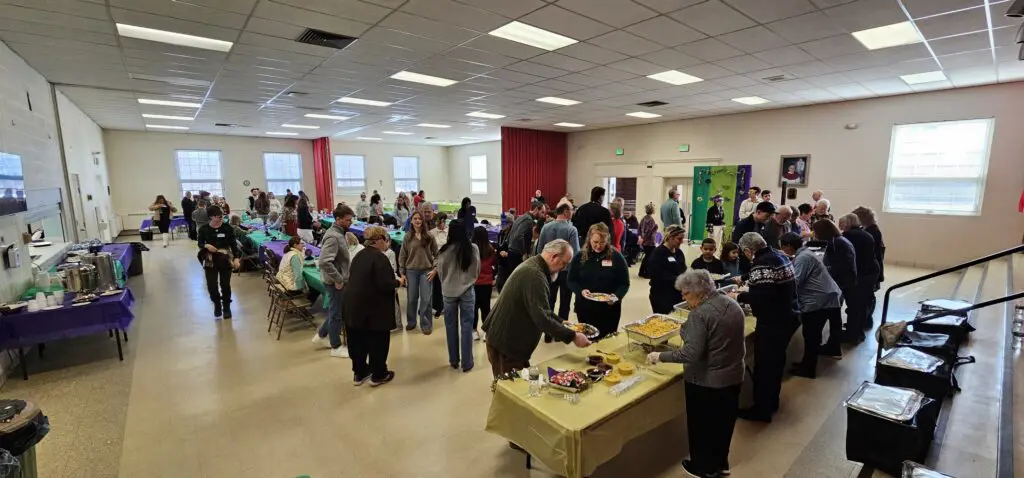
During last year’s Mardi Gras celebration in the church hall, participants enjoy a variety of meal choices.
SUBMITTED PHOTO

“I work with a gal who goes to a church in Hartford and one Lent the priest had a Mass on Mardi Gras night and asked people to bring what they were giving up for Lent,” Jeanne Forschino, who heads the Sacred Heart Social Committee, explains. “I thought that was a great idea and just think of how this would impact children at the Mass, to visibly see their parents presenting something and themselves bringing something as well.”

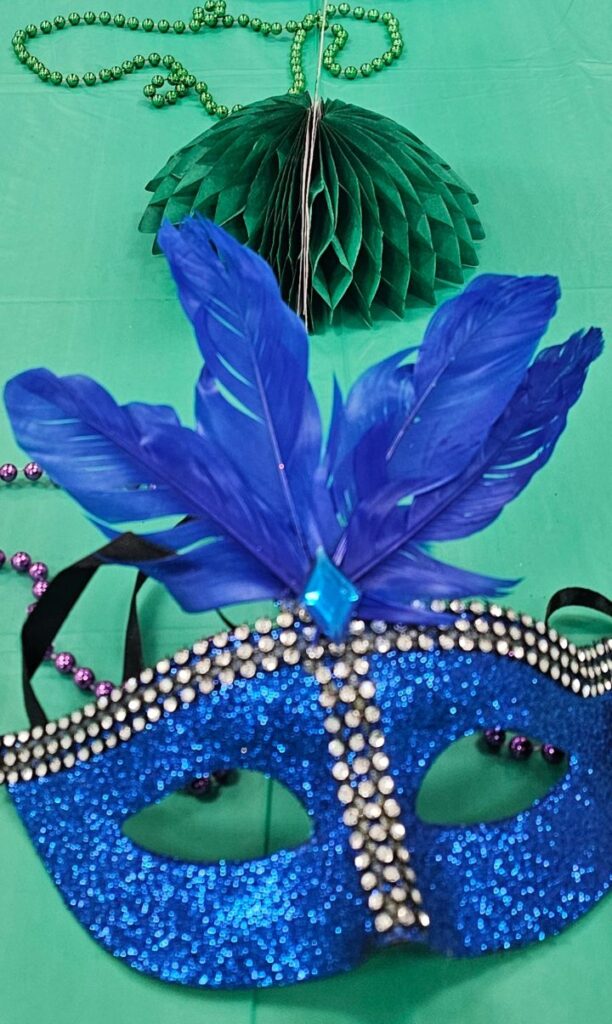
Ornate masks are a key symbol of Mardi Gras, representing mystery, freedom and social equality. They’ve been part of Mardi Gras celebrations for centuries, growing out of a mix of longstanding cultural traditions. SUBMITTED PHOTO

Forshino adds attendance is strongest when activities are held immediately after weekend Mass and paired with food, which led the committee to plan a lunch following the final Sunday Mass. After limited participation in a written Lenten intentions book last year, the group will instead invite parishioners to place name tags with Lenten promises into a basket for the altar.

This year’s celebration will feature a catered meal (tickets are $15 per adult and $5 per child) to help cover costs. Tables will include information about Lenten devotions, offering attendees a transition from celebration to reflection.

Forschino notes barbecue food will be served, including pulled pork, smoked chicken, macaroni and cheese (a gluten free option will be available), green beans with almonds, rice and beans, and chicken tenders.Music will fill the hall thanks to Paul Kulas, a beloved parishioner in his mid-90s who plays saxophone and clarinet, adding warmth and nostalgia to the afternoon. Children will also enjoy activities such as making Mardi Gras masks and coloring beads to take home.

The event follows a tradition Sacred Heart has been building in recent years: creating opportunities for parishioners to gather beyond Sunday Mass. From barn dances hosted by parish families to themed dinners for Valentine’s Day and St. Patrick’s Day, these events have helped strengthen parish life. Mardi Gras, however, has captured something special.

For Father Joseph Keough, pastor of Sacred Heart Parish, the event will be a “fun-raiser” and he credits Forschino’s dedication and perseverance.

“Jeanne is a very determined person and she’s done a fantastic job with it,” he adds.

As Lent begins just three days later, Sacred Heart’s Mardi Gras celebration serves as a notable commencement to the 40 days that recall Jesus’ time in the wilderness. For more information or to attend, parishioners may contact Forschino at 860.254.5421.

Franciscan Sister Reflects on Quarter Century at the National March for Life

Story by Shelley Wolf

This year Sister Suzanne Gross, a member of the Franciscan Sisters of the Eucharist in Meriden, will have attended the national March for Life in Washington, D.C., for a total of 26 years. Since she began marching, she has only missed a few years due to a snowstorm and the pandemic.

To top it off, Sister Suzanne has reached another milestone: her 80th birthday. And yet she accompanies young people and adults on this annual pilgrimage in the cold and thinks nothing of it.

“I’m very blessed with good health,” says Sister Suzanne, who attended this year’s national March for Life events in Washington, D.C., on Jan. 22 and 23. “I think the Franciscan way of life is a good thing. We have a really strong schedule.

“I grew up in Iowa on a family farm. So, I keep busy cleaning and weeding the garden in Meriden. I love that,” she says. “I walk a little slower, but I’m doing well.” She also continues to work in home health care administration.

This year, Sister Suzanne boarded one of two buses sponsored by the Archdiocese of Hartford that was headed for Washington, D.C. She’s a believer that she needs to make her position clear about the critical importance of protecting all human life, no matter what the U.S. Supreme Court thinks.

“You can just look at the abortion statistics or people’s attitudes toward unborn life. I can’t say how important this event is because there’s such a lack of reverence for life, whether it’s for the elderly or for the unborn. And people don’t even think a baby is a baby, until when?” Sister Suzanne asks.

“Our Church has such a correct and beautiful presentation of how life is sacred from the moment of conception,” she says.

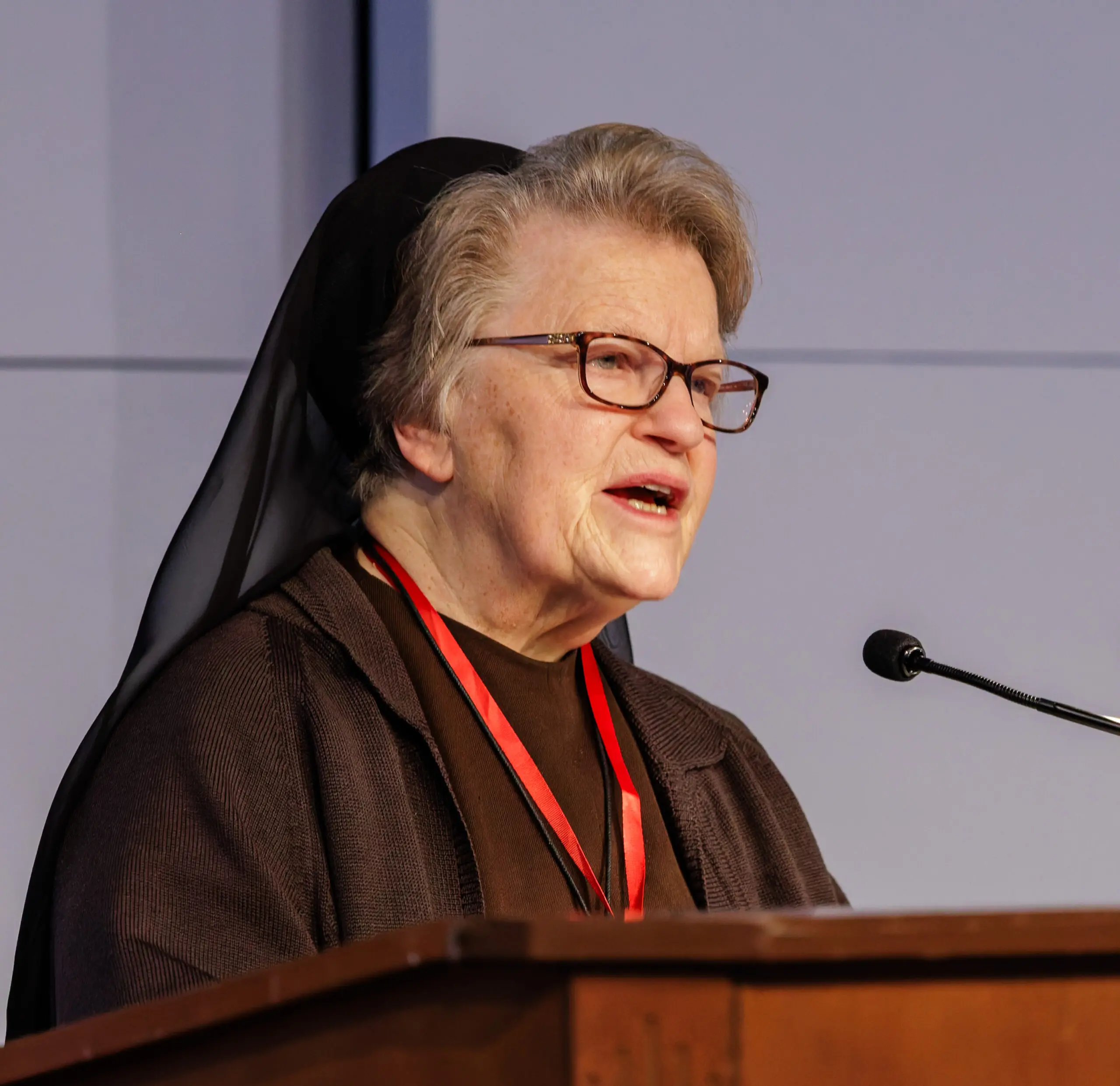
Sister Suzanne introduces the pro-life speaker during the Archdiocese of Hartford’s annual Mass and breakfast held at the Kellogg Conference Center. PHOTO BY AARON JOSEPH

The Washington trip also gives her the opportunity to meet young people from throughout the archdiocese. “This march is something people like to do. More than 150,000 people come together for a peaceful march,” she points out. “We’re helping to build a culture of life. We’re helping young people have their chance. And we have students coming from different Catholic schools,” such as from St. Paul Catholic High School in Bristol.

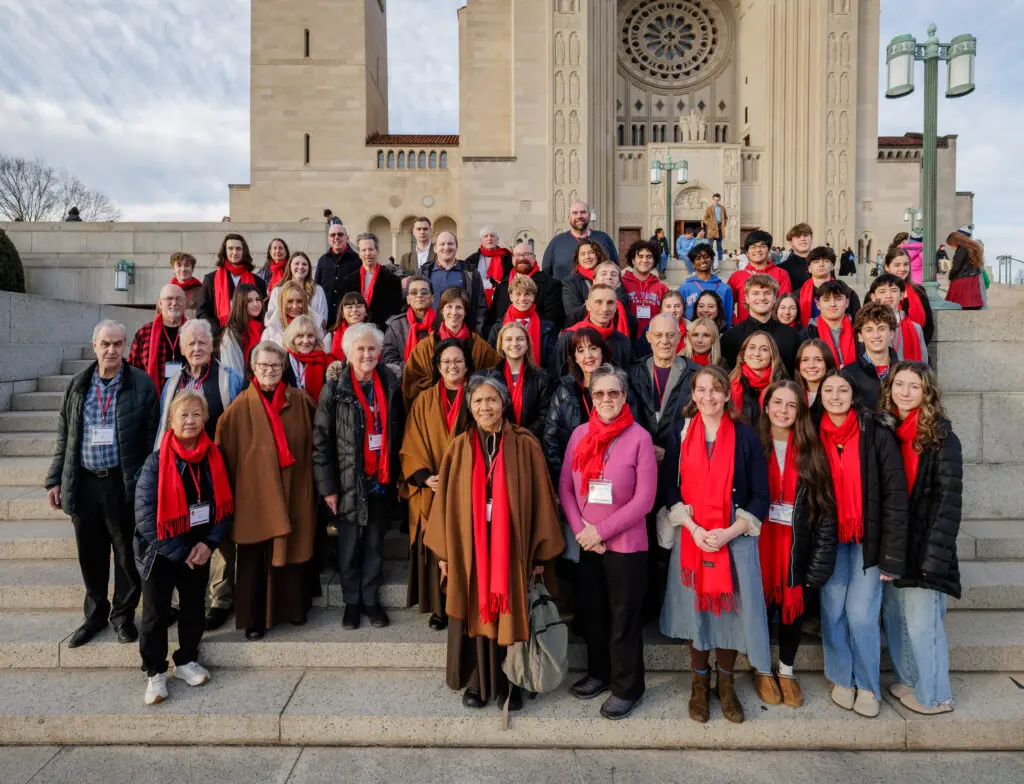
Sister Suzanne poses with this year’s archdiocesan pilgrims on the steps of the Basilica of the National Shrine of the Immaculate Conception. PHOTO BY AARON JOSEPH

The national March for Life offers two full days of activities, she adds, and she loves it.

“It’s always kind of a surprise. That time together on the bus with the young people is always good, and the Basilica of the National Shrine of the Immaculate Conception Mass is so meaningful. It’s just such a wonderful experience of the Catholic Church,” Sister Suzanne says, with bishops and priests present from across the country.

During the actual march from the National Mall to the Supreme Court building, she is thrilled to see the Archdiocese of Hartford banner held overhead, letting people know that a Hartford contingent is present, standing up for the beauty and dignity of all life.

Over the years, fewer buses have departed from Connecticut, she notes, with many people shifting their attention to the Connecticut March for Life in Hartford. “Still, we’re grateful to have these two buses,” Sister Suzanne says.

The Franciscan Sisters of the Eucharist will be present at the state march, too – at the Connecticut March for Life on March 18 at the Connecticut State Capitol in Hartford. For more information, visit marchforlife.org/Connecticut.

Men’s Group Inspired by St. Joseph the Worker

Story by Joe Pisani

Thirty years ago, when Deacon Nick Genovese and his friends approached the now-deceased Father Francis X. Callahan about starting a men’s group at St. Agnes Church, he asked half-jokingly, “What do you guys want to do? Play cards?”

Of course, that was never part of the plan, Deacon Genovese recalls, laughing. Today, the St. Joseph Men’s Society of Precious Blood Parish, made up of St. Agnes and St. Mary churches in Milford, is known for its service to the church and the community, which includes everything from an annual golf tournament to a Lenten dinner, a parish picnic, a Communion breakfast, ‘coffee and’ after Mass, and a St. Patrick’s dinner.The list also includes occasional chores and repair work, such as replacing the padding on the kneelers at St. Agnes, all done in the spirit of their patron, St. Joseph the Worker.

Deacon Genovese, the group’s president, says some 20 members willingly volunteer as the occasion requires. 

“We named it for St. Joseph the Worker because the guys do work,” he says. “If there’s anything that needs to be done or if the men can help with projects in the parish, they are there.”

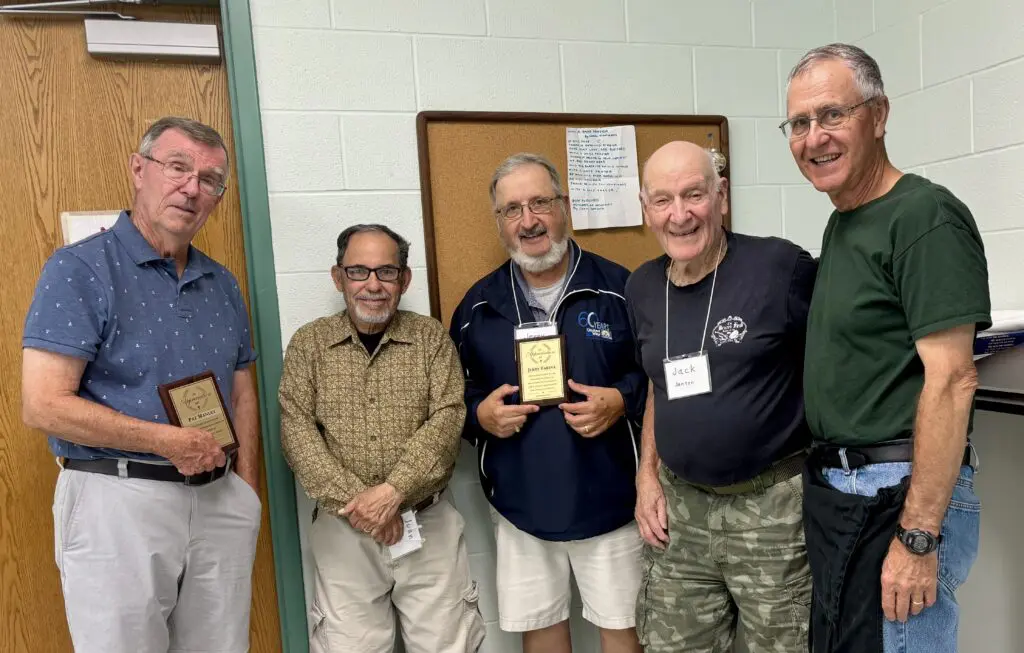
Members of the St. Joseph Men’s Society are honored, from left, Pat Manley, past president; Juan Reyes, past president; Jerry Farina, golf committee chairman; Jack Jansen, treasurer; and Thomas Maguire, chef. SUBMITTED PHOTO

The group meets the first Monday of the month from September to June, 5:30 p.m., in Father Callahan Hall at St. Agnes Church.

The men begin with a prayer and then a Scriptural reading, followed by a reflection by Deacon Genovese. Then, they have dinner and a business meeting to discuss upcoming activities and the distribution of funds to groups they help. A parish priest, including Father Aidan Donahue, the pastor, usually attends the meetings.

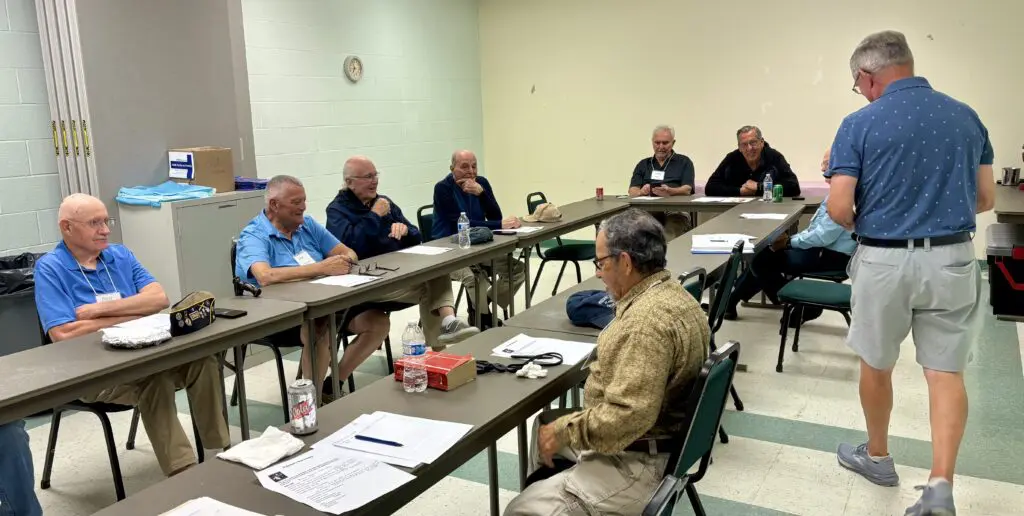
Members at their monthly meeting at St. Agnes Church. SUBMITTED PHOTO

The monthly meal is a tradition that goes back almost to the beginning. Deacon Genovese recalls it was Father Callahan’s idea to boost membership; and it worked. Thomas Maguire is the resident chef who prepares everything in the kitchen at the church hall.

The biggest event the men’s society sponsors is the annual golf tournament, held on the last Monday in July. Proceeds from the tournament, which is organized by Jerry Farina, who succeeded his father as golf chairman, are used to benefit charitable organizations, including the pro-life group for unwed mothers, Ronald McDonald House®, the Boys and Girls Club, veterans organizations, and the homeless.

“We’ve been very successful over the years, thanks to all the support we got,” Deacon Genovese says. “It’s a great bunch of guys, and now we have some from St. Mary’s since we combined with them to form Precious Blood Parish.” Dues are still $5 a year.

He credits the other founding members — the late Bill McMullen, Lou Elmo and Richard Carnaval — for their vision in starting the society.

“Jack Jansen has been our treasurer for 30 years, since the organization started, and he recently turned 90 and still plays golf,” Deacon Genovese said. “We had a party for him and honored him with a plaque.

Fundamental to the group’s success all these years is their patron, St. Joseph the Worker.

“Think about it. St. Joseph was the protector of Our Lord Jesus Christ. He was a model father and a model worker. We all look up to him and respect him as a saint,” Deacon Genovese says.

He also tells a story about the annual golf tournament and St. Joseph: “When you play golf, you want good weather, and in the 25 years of the tournament, it has never been rained out,” which is a blessing he attributes to their patron.

For more information about the St. Joseph Men’s Society of Precious Blood Parish, contact Deacon Nick Genovese at nicholasgenovese@sbcglobal.net.

New Chesterton Academy of St. Francis of Assisi to Open This Fall

Story by Shelley Wolf

As the demand for Catholic education continues to grow, a new Catholic high school is planning to open its doors this fall in New Britain to serve families in central Connecticut.

Chesterton Academy of St. Francis of Assisi, a new high school, will be welcoming students to the existing school building on the St. Francis property at 30 Pendleton Road, New Britain. The school will open with students in grades nine and 10, adding grades 11 and 12 over the next two years.

“It’s very exciting, and it’s exciting to Father Michael Casey,” says Andrew Blaski, the new headmaster, who was hired to start hiring and admissions.

The school will be part of the Chesterton Schools Network, a national organization founded in Minnesota that has developed curriculum for its more than 70 private Catholic liberal arts schools in the country.

The Chesterton Academy of St. Francis of Assisi will also be a parish school, part of St. Francis of Assisi Church, under Father Casey and the Archdiocese of Hartford.

“Most Chesterton Schools are independent Catholic schools, but as conversations progressed Archbishop Christopher J. Coyne decided to make it a parish school, which I think is wonderful,” Blaski says. “There’s a whole host of support from the Superintendent of Schools Valerie Mara, use of the parish school building, the help of parish staff, and the daily Mass will be available to us.”

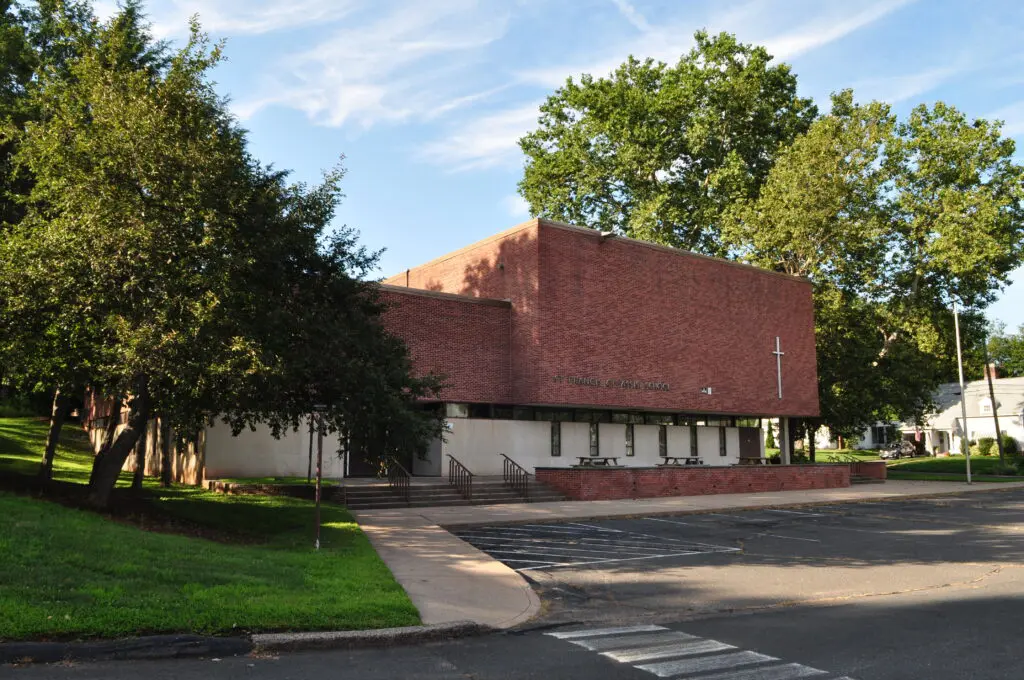
The Chesterton Academy will be in the former St. Francis School, located behind St. Francis of Assisi Church. PHOTO BY SHELLEY WOLF

What sets this Catholic high school apart from others in the archdiocese, he says, is a broad classical liberal arts education that is integrated and historically based. It will transport students back to the ancient world of Greece and Rome, through the Medieval period, through the High Middle Ages and the Renaissance, to the Modern World.

Following the Chesterton Academy model, this classical education will teach grammar, logic and rhetoric, as well as music, arithmetic, geometry and astronomy.

In the humanities, students will be challenged to read primary sources from Western civilization, such as the works of Plato, Aristotle, St. Augustine, St. Thomas Aquinas, Shakespeare and Chaucer. “There’s a heavy reliance on the great works of Western civilization. We want our students to have exposure to the great masters,” Blaski says, and “an ability to penetrate dense and difficult ideas.”

They’ll also learn through the Socratic seminar style of teaching, which emphasizes discussion and conversation, preparing students for college-level learning.

Math and science courses will employ modern textbooks but also focus on sparking wonder and an understanding of the created world, Blaski notes. The visual arts, art history, music, drama and choir will complement their education.

The Catholic faith, central to the school’s mission, will be celebrated through the daily Mass and a focus on the sacramental life and the human virtues. Students will read the Catechism, the New Testament, and learn Latin and Spanish.

Tuition will be $9,000 a year, affordable for a Catholic school, according to Blaski, and financial assistance may be available.

The school is planning to hold a series of public information sessions so interested parents can learn more about its offerings and how to enroll. A virtual information session will be held on Tues., Jan. 27 at 7 p.m., followed by an in-person information session at the school building on Sun., Feb. 1 at 1 p.m.

Chesterton Academy is currently accepting applications. To apply or learn more, interested families should visit chestertonsfa.org or call Andrew Blaski at 860.348.3455.

Women’s Book Club Explores the Catholic Faith

Story by Joe Pisani

When Margaret Siena was in third grade, one of her favorite books was an illustrated Little Book of Saints for children, with stories about young women like St. Agnes and St. Cecilia.

“I could read it again and again and again,” she recalls. “It was entertaining and informative and spiritual.”

Now, as president of the Women’s Guild of Holy Infant Parish in Orange and coordinator of its recently formed Catholic book club, she uses those same criteria in her search for reading material that will inspire the group spiritually, entertain them and inform them.

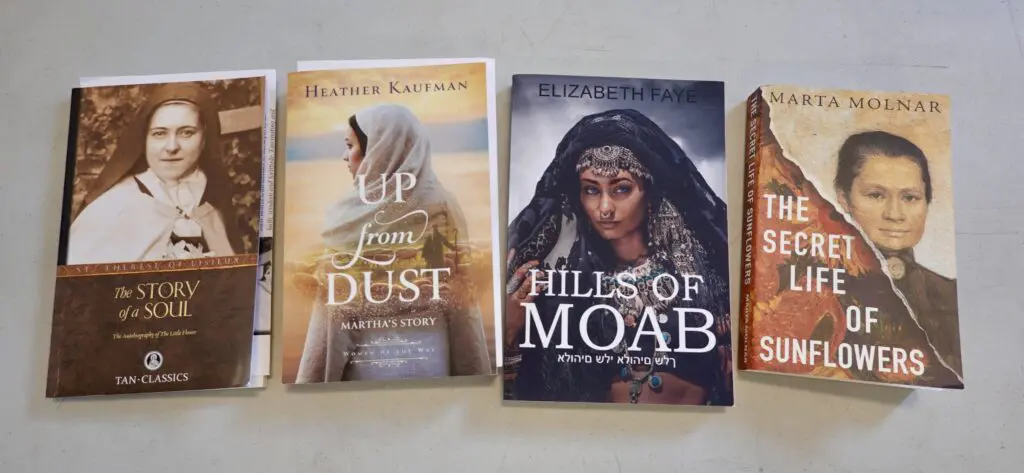
Since it began last year, participants have read several books, including The Story of a Soul, St. Thérèse of Lisieux’s autobiography; Up from Dust, historical fiction about St. Martha of Bethany, sister of Mary and Lazarus; and Hills of Moab, a novel based on the Old Testament Book of Ruth, about a  Moabite woman who married an Israelite and became an ancestor of King David.

“The goal of the Women’s Guild book club is to offer enjoyable, inspirational reading while deepening our faith,” Siena says. “Its focus is on woman saints, women of the Bible and Catholic women authors.”

The bimonthly discussions are led by Donna DiMassa of St. Raphael Parish in Milford, who also leads a mystery book club at Case Memorial Library in Orange.

These biblical fiction and Catholic books have been read by book club members. PHOTO BY JOE PISANI

DiMassa began a recent meeting with a prayer she wrote that invokes the Holy Spirit: “Holy Spirit, we pray that through this newly formed Women’s Guild book club, we come to know and understand you better and that we learn better how to serve you in our day-to-day lives. When we are reading the selections, help us to see the work through your divine lens so that we glean the lessons that you want to teach us. Lastly, when we are discussing the selections, let us learn at least one thing that will help us love you better and bring us ever closer to you.”

Siena, who has been president of the Guild for more than a year, is committed to sponsoring activities that engage members in small groups. A lifelong reader, she searches for books that will be compelling to the women. Her research entails perusing reviews, looking at lists of popular books and talking to avid readers.

“I find myself spending a lot of time searching for the right book,” she says. “Not just the right book, but the right book from a Catholic perspective that will appeal to women.”

She also believes that historical fiction based on Bible stories will offer an entertaining introduction that can entice readers to further biblical study.

The discussions have been enjoyable for the women, who can relate to the experiences of characters like Ruth and St. Martha of Bethany.

Siena has always enjoyed historical fiction, especially stories about the role of women during World War II, and works of history that are accessible to a general reading public and not entirely academic.

“I have a curiosity about a lot of things, and I like to read because I can get into the characters,” she says.

Father Norman Brockett, pastor, praises the initiative. “It provides a great opportunity for women to develop spiritually, while engaging in discussions about issues that are timeless and also relevant to them,” he says.

Most of all, Siena wants the club to be enjoyable and not have the members feel as if they are reading for a class assignment.

“We’re not theologians,” she adds. “I just want the women to appreciate the beauty of the Catholic faith.”